
Should 70-Year-Olds Still Be Driving? Here’s How Strict Other Countries Are
Many countries impose stringent conditions on elderly drivers before they are eligible to renew their licences.


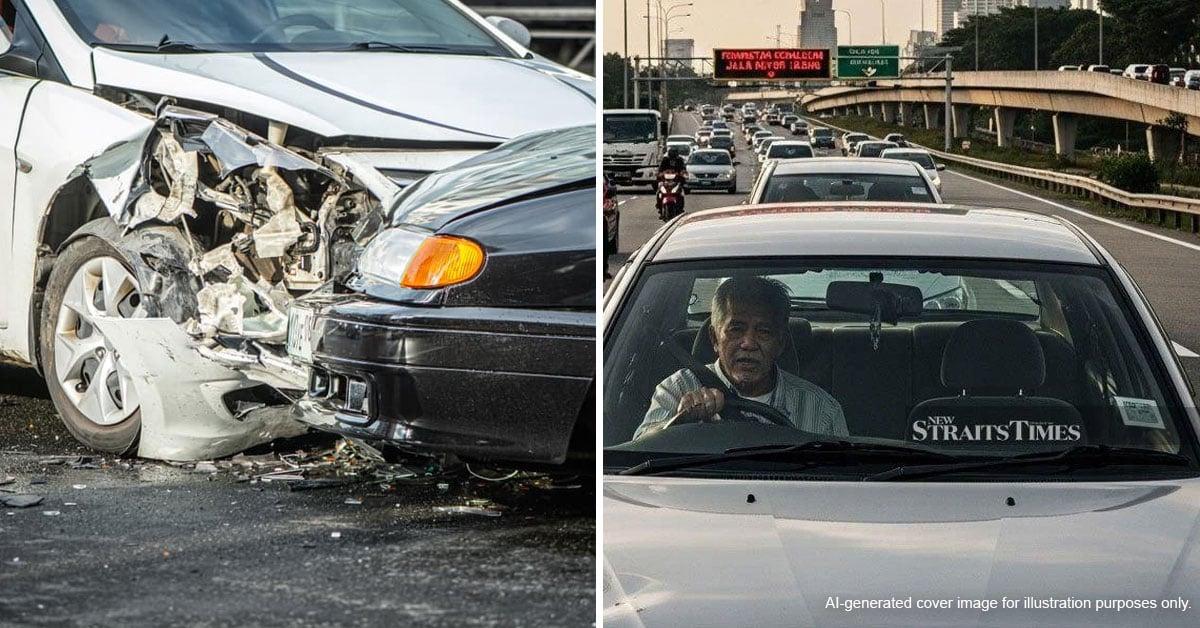 Cover image via
 Follow us on Instagram, TikTok, and WhatsApp for the latest stories and breaking news.
News of elderly drivers causing serious, and sometimes fatal, accidents have dominated headlines lately
From a 75-year-old man being charged over the deaths of two sisters in Klang, to another septuagenarian driver being detained following a fatal crash involving a motorcyclist in Petaling Jaya, as well as an 84-year-old man crashing into a coffee shop in Kuching, these incidents have sparked debate over whether stricter rules are needed to regulate senior citizens' driving licences.
According to data from the Royal Malaysia Police (PDRM), Utusan Malaysia reported in August last year that more than 19,800 elderly drivers were involved in road accidents across Malaysia between 2019 and 2024.
Of that number, 6,733 elderly road users died in the accidents. In other words, about nine senior citizens were involved in accidents each day, while roughly three died daily.

Since 2021, Malaysia has been classified as an ageing nation, with 7% of its population aged 65 and above.
The government has projected that the country will become an aged nation by 2048, with 14% of the population expected to be aged 65 and above.
Under Section 30(3) of the Road Transport Act 1987, driving licence applicants are only required to declare whether they suffer from any medical condition or physical disability that could affect their ability to drive safely.
Under that provision, senior citizens currently face no age limit or mandatory health screenings when renewing their driving licences.
The Road Transport Department (JPJ) allows drivers aged 60 and older to renew their licences for up to 10 years as usual, with the benefit of receiving physical licences printed free of charge.
That lenient approach stands in stark contrast to many countries that have introduced defined parameters for senior citizens to maintain their driving licences.

AI-generated image for illustration purposes only.
Image via New Straits TimesHere are some countries with stricter rules for elderly drivers:
| Country / Jurisdiction | Policy for Elderly Drivers | Unique Features / Focus |
|---|---|---|
| Singapore | From age 65, drivers must undergo a mandatory medical examination every three years to keep their licence valid. | Focuses on frequent, doctor-certified medical fitness rather than re-testing driving skills. |
| Taiwan | From age 70, drivers must undergo a physical examination and complete traffic-safety education before renewing their licence. From age 75, licence renewal is required every three years with physical and cognitive checks. | Combines health screening with safety education, with cognitive checks introduced for older seniors. |
| Japan | Drivers aged 70 and above must attend elderly-driver training when renewing their licence. Those aged 75 and above must also take a cognitive assessment, which determines the type of training required. | Japan also promotes voluntary licence surrender, with some local programmes offering seniors discounts on groceries, taxis and public transport. |
| Australia (New South Wales) | From age 75, drivers must pass an annual medical review. From age 85, they must pass a practical driving test every two years or opt for a modified licence, such as driving only within a local area. | One of the stricter systems, combining medical reviews, practical road tests and restricted licensing options. |
| United Kingdom | At age 70, driving licences expire. To continue driving, seniors must renew every three years instead of every 10 years. | Uses a self-declaration system. No mandatory medical exam or driving test is required, but drivers must declare relevant medical conditions. Penalties may apply for withholding information. |
| New Zealand | At ages 75 and 80, drivers must renew their licence and provide a medical certificate. From age 80, renewal and medical certificates are required every two years. | A doctor decides whether the senior is fit to drive, requires conditions placed on the licence, or should take an on-road safety test. |
| United States (varies by state) | Rules differ by state. For example, in Illinois, the older a driver gets, the shorter the licence renewal period becomes, while Florida requires vision tests for drivers aged 80 and above during renewal. | Highly decentralised. Some states, such as Michigan, have no age-specific rules, while others require in-person renewals, vision screening, or road tests. |
