
As Malaysia’s Digital Economy Grows, Here’s Why Trust Could Be As Important As Technology
When interacting online, remember: Don't rush!


 Cover image via
 Follow us on Instagram, TikTok, and WhatsApp for the latest stories and breaking news.
From AI and 5G to online banking and digital payments, technology has become part of how people live, work, and do business
But as more people and businesses move online, another question becomes increasingly important: how much do we actually trust the technology we use every day?
That was one of the key issues discussed at M360 ASEAN 2026 in Kuala Lumpur, where governments, regulators, and industry players came together to discuss the future of the region's digital economy.
The question is especially relevant as online scams continue to affect consumers across the region
The ASEAN Consumer Scam Report 2026, cited during the discussion, found that almost one in 10 consumers across six ASEAN countries reported becoming victims of scams in the previous 12 months.
That is why it's important for Malaysians to always be wary of calls, messages, links, or online transactions. When an individual starts to question if their everyday conversations can be trusted, the impact stretches far beyond themselves.
Speaking on the topic, Datuk Zulkarnain Mohamad Yassin, senior operations adviser at the Malaysian Communications and Multimedia Commission (MCMC), explained that trust is fundamental to how people and organisations adopt technology
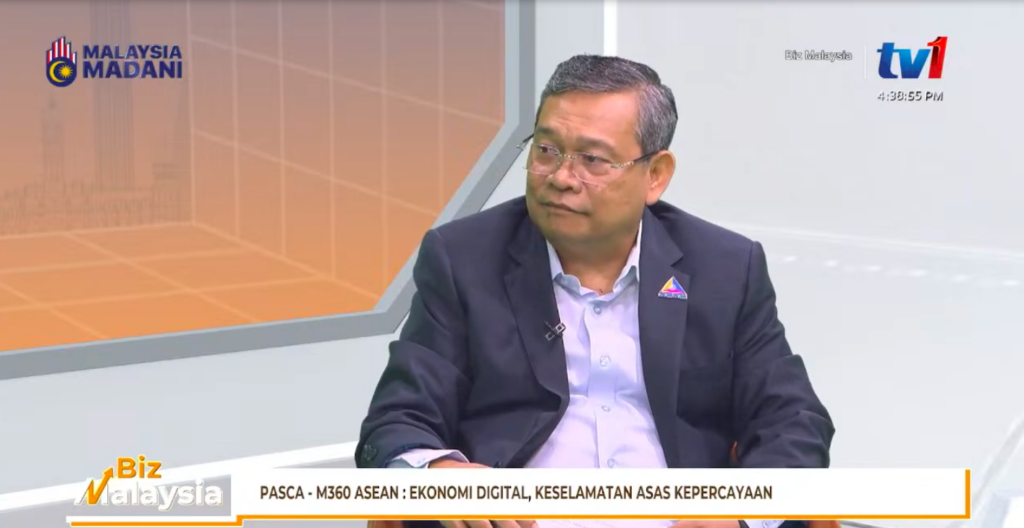
It is not simply about whether a particular technology is capable of doing what it promises. People also need confidence that the technology is secure enough to use.
"Trust, in any aspect, is fundamental to development and progress," he said, pointing to technology adoption, usage, and investment as areas where trust plays a role.
That applies to businesses too, particularly SMEs that are increasingly encouraged to adopt digital tools.
Meanwhile, for investors, trust can come down to whether they have confidence in the wider framework surrounding the digital economy, including governance, regulation, and digital taxation. There are also more specific concerns around emerging technologies such as AI, including data breaches, and whether sensitive business information or trade secrets could be exposed.
So, why are scams still so effective?

Part of the problem may have less to do with technology itself and more to do with how people react when they are under pressure. Datuk Zulkarnain pointed out that people naturally tend to act in a hurry, something scammers can take advantage of by creating a sense of fear or urgency.
"In cybersecurity, human being is the weakest link," he said, explaining that people can be susceptible to emotional manipulation, particularly when they are pushed to act quickly.
Beyond suspicious calls and messages, scammers can now use AI-generated content to impersonate people, including company CEOs and public figures.
Datuk Zulkarnain shared that MCMC has introduced technical interventions to prevent certain scam calls from reaching users, including spoofed calls using Malaysian numbers.
According to him, more than 1.1 billion such calls have been blocked, alongside efforts to block malicious SMS links. But even with these measures in place, scammers continue to find new ways to reach potential victims.
One of the simplest takeaways from the discussion was also one of the most practical: Don't rush!

Datuk Zulkarnain described restraint as an important way for users to interrupt a scammer's attempt to manipulate them.
When someone is pressured into making an immediate decision, taking a moment to pause can give them the space to think instead of allowing their emotions to take over.
He described this restraint as a "killer switch" that can interrupt a scammer's modus operandi. He also encouraged people to talk to someone else, particularly when a situation involves money, relationships, employment or investments.
There is another side to the conversation that is easy to overlook
When someone loses money to a scam, it is usually viewed as an individual financial loss. But Datuk Zulkarnain suggested looking at scams through a much wider economic lens.
He described five layers of impact, starting with households, and extending to businesses, the financial system, the national economy and economic security.
For households, the impact can be immediate: Money that was meant for everyday expenses or future plans is simply gone.
For businesses, particularly SMEs, the consequences can be even more significant.
At another level, scams can also affect the financial system when financial infrastructure is manipulated to facilitate the movement of money, potentially adding to operating costs across the system.
Then there is the national economic impact. Datuk Zulkarnain cited a 2025 figure from the Royal Malaysia Police (PDRM) of around RM2.97 billion in reported losses, while noting that international scam syndicates can also result in money flowing out of the country.
This is where the idea of digital trust becomes bigger than simply protecting users from scams
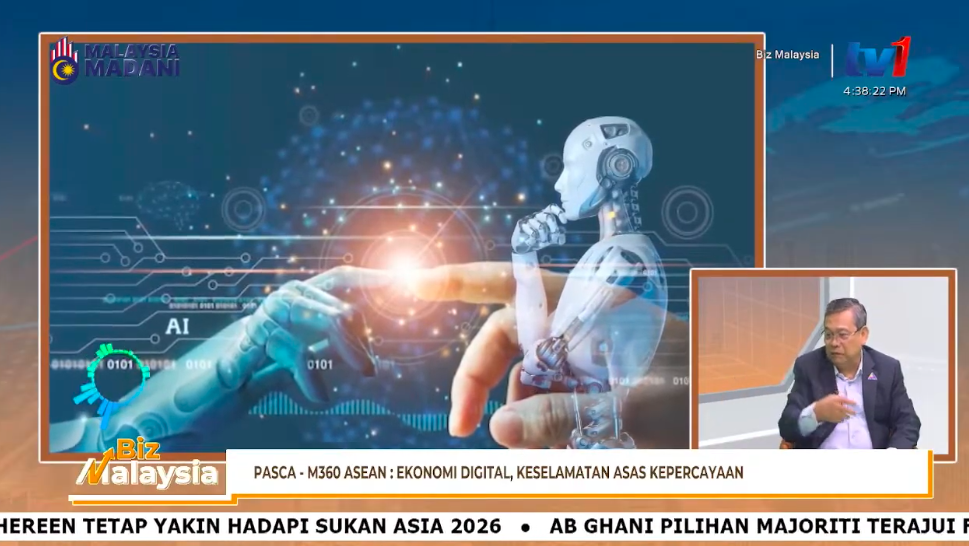
Datuk Zulkarnain highlighted the importance of developing the digital workforce alongside technological investment, including helping workers build new capabilities as AI changes the nature of certain jobs.
He gave the example of how a worker who currently handles complaints, and enters related data could potentially move towards a more analytical role with the help of AI. That shift illustrates why digital transformation is not simply about buying new technology. It is also about making sure people have the skills to use it meaningfully, and safely.
Ultimately, the growth of Malaysia's digital economy will depend on more than faster networks, AI tools, data centres or the number of transactions happening online. It also depends on whether people feel confident enough to participate.
As the discussion put it, when people trust that their identities, money, and data are safer, they are more likely to use technology, conduct business online, and take part in the wider digital economy.
