
How To Check If Your Company Is Contributing To Your EPF Properly
It's better to know sooner than later.


 Cover image via
 Follow us on Instagram, TikTok, and WhatsApp for the latest stories and breaking news.
For most of us, Employees Provident Fund (EPF) deductions are just one of those things we leave to HR to handle, we don't even give it a second thought
Your salary comes in, your contributions go out, and we move on with life. But here's the thing, mistakes do happen, and if you're not checking, you might not even realise it until it's too late.
The good news is, it's actually quite easy to verify whether everything's in order.
Before you check anything, you need to know what the correct amount should look like
EPF contributions in Malaysia are split between you and your employer, and the percentages depend on your age and salary.
For employees below 60 years old, the standard breakdown is:
| Category | Salary Range | Contribution Rate |
|---|---|---|
| Employee | All salaries (below 60 years old) | 11% (standard rate) |
| Employer | RM5,000 and below | 13% |
| Employer | Above RM5,000 | 12% |
| Note: Some employees may apply for a lower voluntary contribution (e.g. 9%) via EPF forms (KWSP‑17A/Khas 2021), but employer contributions still follow the RM5,000 split. | ||
So, if you're earning a salary of RM4,500 a month, your employer should be contributing 13% of your income to your EPF.
And, if you're earning a salary of RM6,000 a month, your employer should be contributing 12% of your income to your EPF account.
This threshold is one of the most important things to get right, because even a small percentage difference adds up significantly over time.
Next, log into your EPF account to see if the right amount is being credited
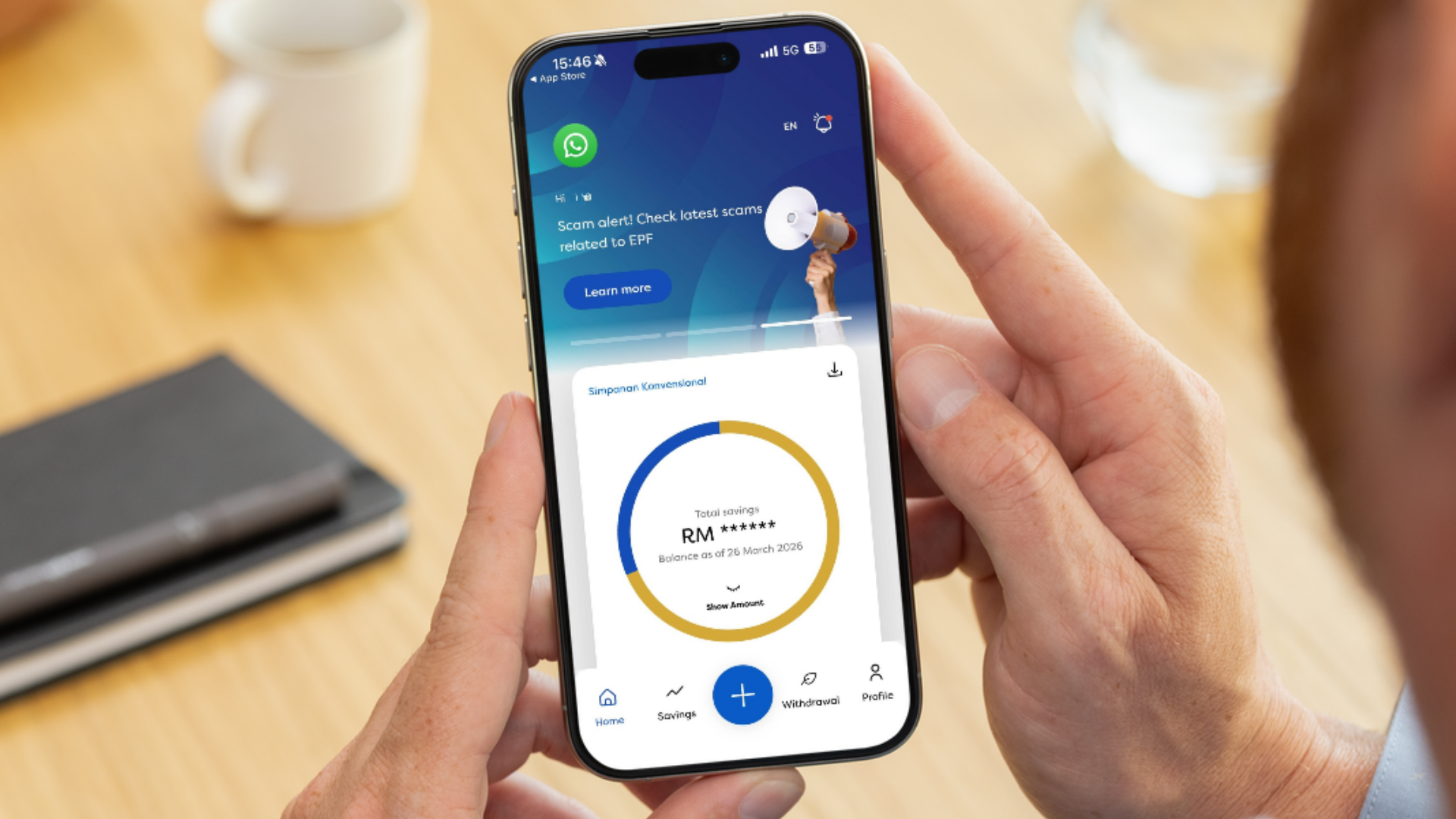
Although your payslip does specify the exact contribution amount, it's a good habit to check the amount that is actually being credited.
You can check this via the i-Akaun online portal or through the i-Akaun mobile app.
Once you're logged in, you should check and focus on the monthly contribution amounts, contribution dates, and the employer's name (especially if you've changed jobs).
If your employer is doing things properly, the numbers should match your payslip almost exactly, and contributions should appear consistently every month.
Here are a few things to keep an eye out for:

- Contributions lower than what's stated on your payslip
- Payments showing up late every month
- Missing employer contributions
- Irregular amounts despite a fixed salary
If the deductions don't add up, start by notifying your company's human resources (HR) department

Sometimes, this is a genuine mistake from the administrator. It's important for you to get some clarification if that's the case.
However, if the explanation seems shady or out of place, you can escalate the issue by lodging a report through EPF's official support channels.
EPF takes contribution issues seriously, and there are enforcement measures in place for non-compliant employers. You can be assured that any issues with your funds will be investigated further.
At the end of the day, it's your money and your future
Make it a habit to check your EPF contributions monthly, as mistakes to your funds could cost you more than you think in the long run.
For more #lifestyle stories:
- RM390,000 Basic Savings By Age 60: Are You Actually On Track For Retirement?
- What's The Difference Between EPF, SOCSO And EIS & How Much Is Taken From Your Salary?
- EPF i-Akaun: How To Register, Log In & Check Your Balance Online
- Here's How Much EPF Savings You Should Have According To Your Age. Are You On Track?
