
Malaysia’s New Passport Is Packed With 94 Security Features. Here’s What They Actually Do
The new Malaysian passport has been almost completely overhauled with nearly double the number of security features to make it much harder to counterfeit or tamper with.


 Cover image via Kementerian Dalam Negeri (KDN) & Bernama
Follow us on Instagram, TikTok, and WhatsApp for the latest stories and breaking news.
Malaysia's newly launched passport now comes with 94 security features, up from 49 in the previous version, making it the country's biggest overhaul of the travel document to date
The upgraded passport, launched by Prime Minister Datuk Seri Anwar Ibrahim today, 30 June, introduces a range of new physical, digital, and biometric security measures designed to make counterfeiting significantly more difficult while allowing faster and more secure identity verification at border checkpoints worldwide.
While the government has not released a complete list of all 94 features for security reasons, the Immigration Department has revealed many of the major upgrades built into the new passport, ranging from advanced holograms and encrypted biometric chips to laser engraving and hidden UV security elements.
Here's a closer look at what makes the new passport much more secure than before.
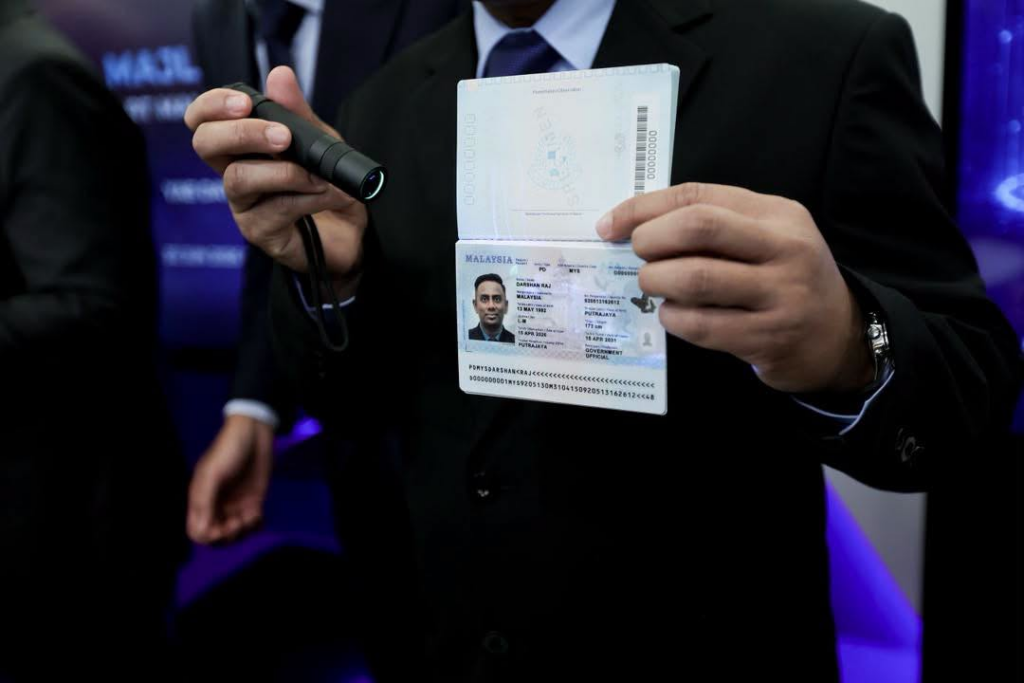
It starts with features that are almost impossible to copy
One of the biggest upgrades is the introduction of a laser-perforated serial number.
Instead of simply printing the passport number onto the booklet, microscopic laser-cut holes are punched through multiple pages to create the serial number itself. Since the number is physically embedded into the passport, it is significantly harder to alter or reproduce.
The passport also features a new angle-sensitive dynamic hologram on the personal data page.
Unlike ordinary holograms, it changes appearance depending on how the passport is tilted, allowing immigration officers to quickly identify genuine documents while making high-quality counterfeits much more difficult to produce.
Hidden throughout the passport are high-resolution security patterns that are almost invisible to the naked eye.
These intricate background designs help prevent digital scanning, colour photocopying, and high-resolution printing from accurately reproducing the document.
Another familiar security feature has also been enhanced: microtext.
These are extremely tiny words and characters printed throughout the passport that cannot be read without magnification. Because of their size and precision, they are nearly impossible for standard printers to replicate accurately.
The pages are also filled with guilloche patterns — intricate geometric line designs commonly found on banknotes and other high-security documents. If someone attempts to alter or recreate the artwork, the patterns become distorted, immediately revealing signs of tampering.
Authorities have also incorporated hidden visual elements, laser surface engraving, and optically variable inks that change appearance under different lighting conditions, adding even more layers of protection against forgery.

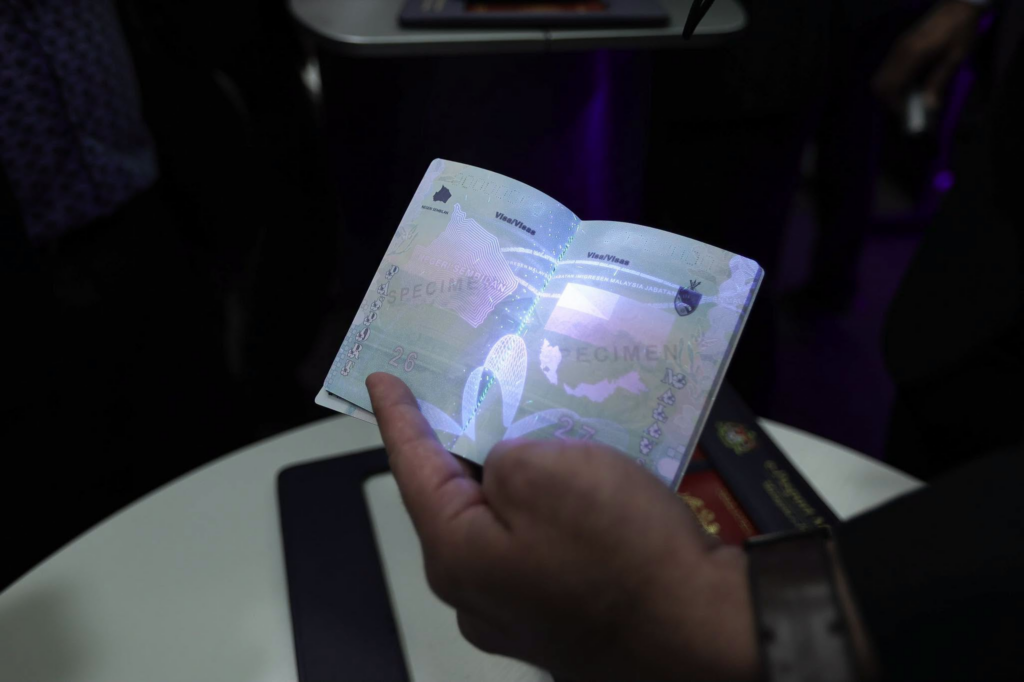
Many of the security features only become visible under special equipment
Not every security feature can be seen under normal lighting.
The passport uses specialised UV security paper embedded with chemical compounds that react only when exposed to ultraviolet light.
Meanwhile, invisible UV security inks are printed across various pages. These remain hidden during everyday use but illuminate under immigration scanners, allowing border officers to instantly verify whether a passport is genuine.
The booklet also contains forensic security markers — specialised authentication features designed for trained document examiners using dedicated verification equipment.
These hidden layers mean that even if a counterfeit passport looks convincing to the human eye, it can still fail professional security checks almost immediately.
The digital technology inside the passport has also been upgraded
Beyond the printed pages, the new passport contains an upgraded contactless biometric chip embedded within the booklet.
The chip securely stores the holder's encrypted information, including their passport details, digital facial image, and biometric identifiers such as thumbprints.
Malaysia has also upgraded the chip's security architecture by moving from the older Secured Access Module (SAM) system to a more advanced Public Key Infrastructure (PKI) framework.
This internationally recognised encryption system allows immigration authorities around the world to securely authenticate the passport while making electronic cloning or data manipulation far more difficult.
When travellers use automated immigration gates, RFID technology allows scanners to communicate wirelessly with the embedded chip. The system then compares the encrypted biometric information stored inside the passport against a live facial scan before confirming the traveller's identity.
Even the passport booklet itself has been redesigned to prevent tampering
The personal information page is now made entirely from polycarbonate, a highly durable material that is far more resistant to bending, peeling, water damage and physical alteration than conventional passport pages.
Built into the polycarbonate page is a transparent security window, making it considerably harder for fraudsters to replace photographs or alter personal information without leaving obvious signs of tampering.
The booklet is stitched together using a specialised security thread containing unique security properties. If someone attempts to take the passport apart and insert forged pages, the thread will show visible evidence that it has been disturbed.
Meanwhile, the passport's 48 visa pages no longer share the same background artwork.
Instead, every single page now features its own unique design showcasing Malaysian landmarks, cultural heritage, and architecture. Rather than reproducing one repeating template, counterfeiters would have to accurately recreate dozens of different page designs throughout the booklet.
The passport's cover, page materials, and binding have also been reinforced to withstand regular travel over its new 10-year validity period.
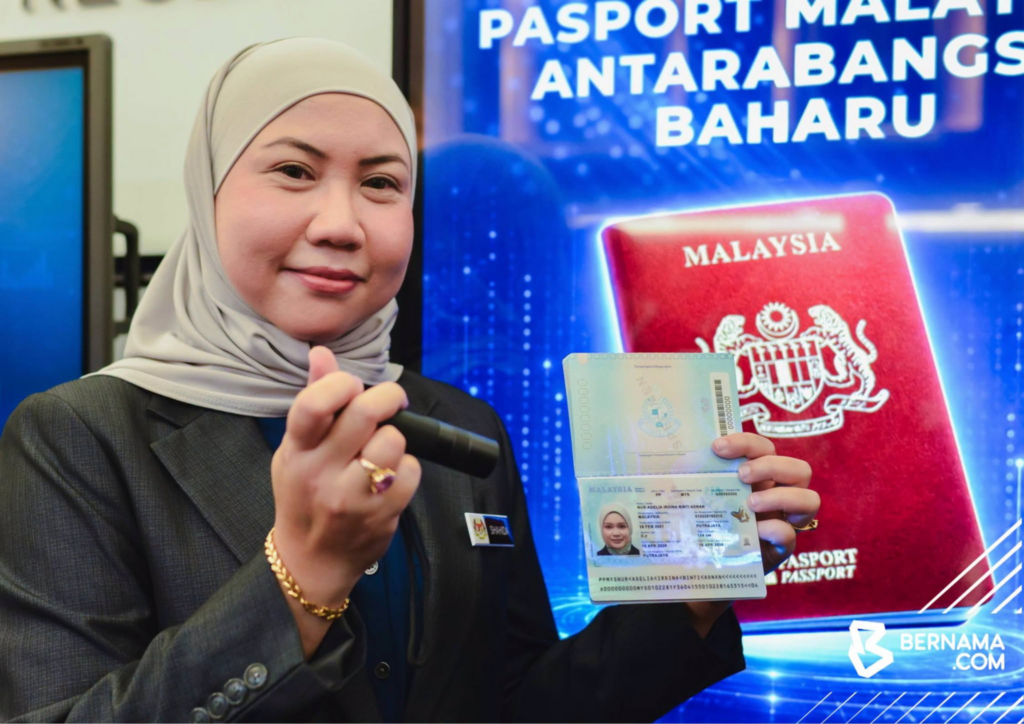
There's one new rule applicants should take note of
Alongside the passport launch, the Immigration Department also issued a warning to applicants about passport photographs.
Photos that have been edited or enhanced using Artificial Intelligence (AI), including facial retouching, beauty filters, skin smoothing or other digital alterations, are not allowed.
Applicants must submit authentic photographs that accurately reflect their current appearance, as the images will be verified using the department's facial recognition system before being stored in the passport's biometric chip.
Existing passports are still valid
The upgraded passport is being introduced together with the new 10-year passport validity option.
However, the Immigration Department stressed that Malaysians do not need to rush to replace their existing passports.
Current passports will remain valid until their printed expiry dates, and travellers can simply switch to the upgraded version when it's time to renew.
