
Malaysia Is Exploring A New Tax System That Could Mix GST Features With SST
The proposed model would keep SST as the foundation while incorporating selected GST features, such as input tax credits, to improve tax collection and reduce tax cascading.


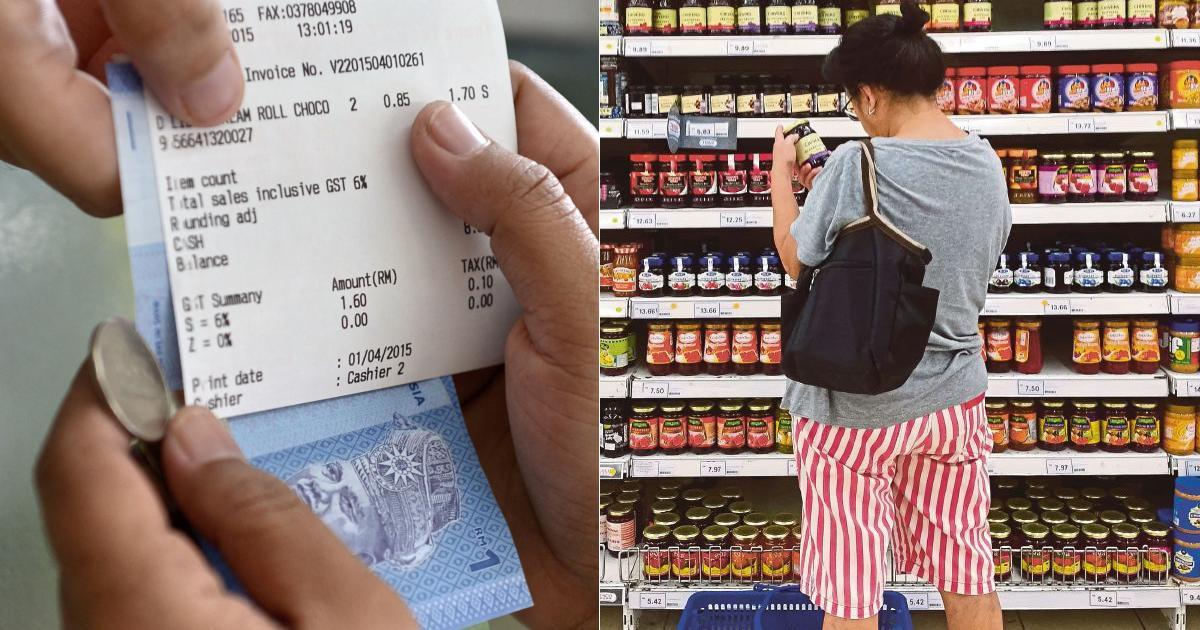 Cover image via Mohd Rasfan/AFP & Asyraf Hamzah/New Straits Times
Follow us on Instagram, TikTok, and WhatsApp for the latest stories and breaking news.
The government has ordered the Finance Ministry to conduct a comprehensive study into a proposed hybrid Goods and Services Tax (GST) and Sales and Services Tax (SST) system
Government spokesman Datuk Seri Fahmi Fadzil said Finance Minister II Datuk Seri Amir Hamzah Azizan has been given time to prepare a report before the proposal is brought back to the Cabinet for further discussion.
"This is still at an early stage, and the Finance Ministry has been given time because this is not something that can be done hastily," Fahmi said during his weekly post-Cabinet media briefing in Putrajaya today, 19 August.
According to the New Straits Times, the study would consider lessons from Malaysia's previous GST implementation, as well as issues under the current SST system.
Fahmi, who is also Communications Minister, said there was no timeline for the study, including whether it would be completed in time for the upcoming Budget 2027, scheduled to be tabled in early October 2026.
The study follows recent remarks by Prime Minister Datuk Seri Anwar Ibrahim that the government was open to incorporating selected GST features into the existing SST framework
Anwar said SST would remain the basis of the country's tax system, while certain adjustments could be considered to improve efficiency and revenue collection.
"We are open to studying ways to improve the tax system," Anwar said after a 2027 Budget engagement session at the Finance Ministry.
However, he stressed that the government did not support introducing a broad-based tax that would place additional pressure on Malaysians already facing cost-of-living concerns.
"GST is a broad-based tax that taxes everyone. I do not agree with that," he said.
Anwar said the government could instead examine specific GST features that could be incorporated into the existing SST system.
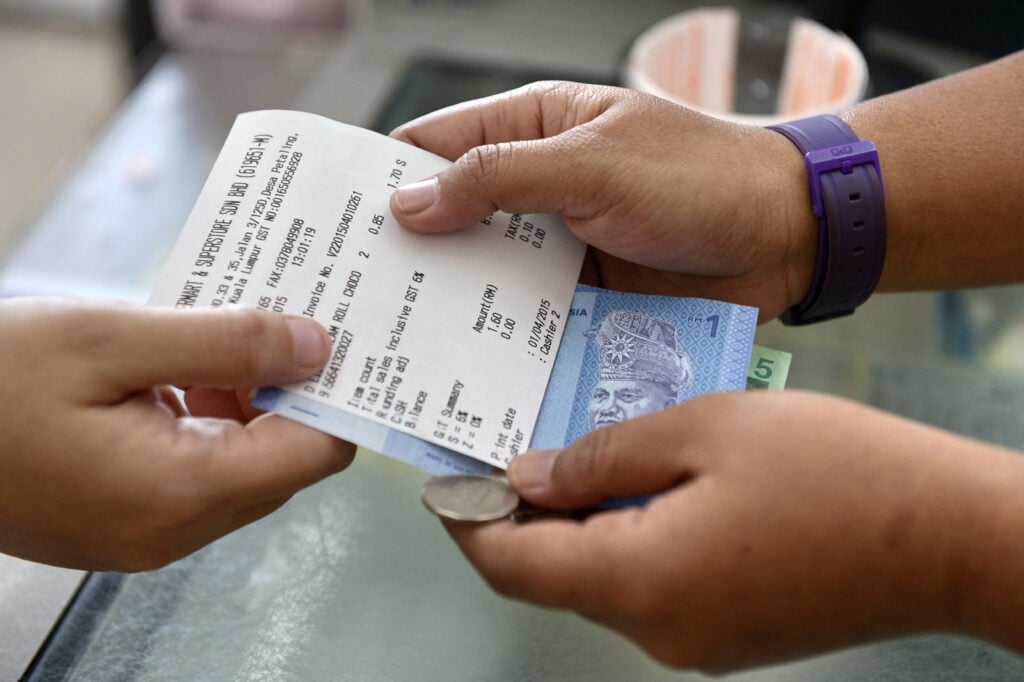
A customer receives a receipt with GST tax information from the cashier counter at a supermarket in Kuala Lumpur on 1 April 2015.
Image via Mohd Rasfan/AFPSo, what could a hybrid GST-SST look like?
One possibility highlighted by tax experts to the New Straits Times is the introduction of an input tax credit (ITC) mechanism for selected sectors or business-to-business transactions.
KPMG Malaysia head of tax Soh Lian Seng said businesses under the current SST regime can end up bearing embedded taxes that cannot be recovered, resulting in tax cascading.
He said a limited and targeted credit mechanism could reduce these inefficiencies without requiring Malaysia to return to a full GST model.
Soh also said enhanced invoice-based reporting and digital tax administration could strengthen SST administration and reduce revenue leakages.
Bank Muamalat Malaysia chief economist Dr Mohd Afzanizam Abdul Rashid, however, cautioned that any new system should not become burdensome for businesses or consumers.
He pointed to delayed ITC refunds during the previous GST era as a concern, saying they could affect businesses' cash flow.
SME Association of Malaysia national president Chin Chee Seong said an ITC mechanism could help address tax cascading, but cautioned against creating an overly complicated system that could increase cumulative business costs and eventually be passed on to consumers.
Small and Medium Enterprises Association of Malaysia (SAMENTA) national president Datuk William Ng similarly said delayed input tax refunds remained a major concern from the previous GST era.
Ng also called for a strict timeline for processing refunds, noting that businesses had already invested in systems for GST, SST, and e-invoicing.
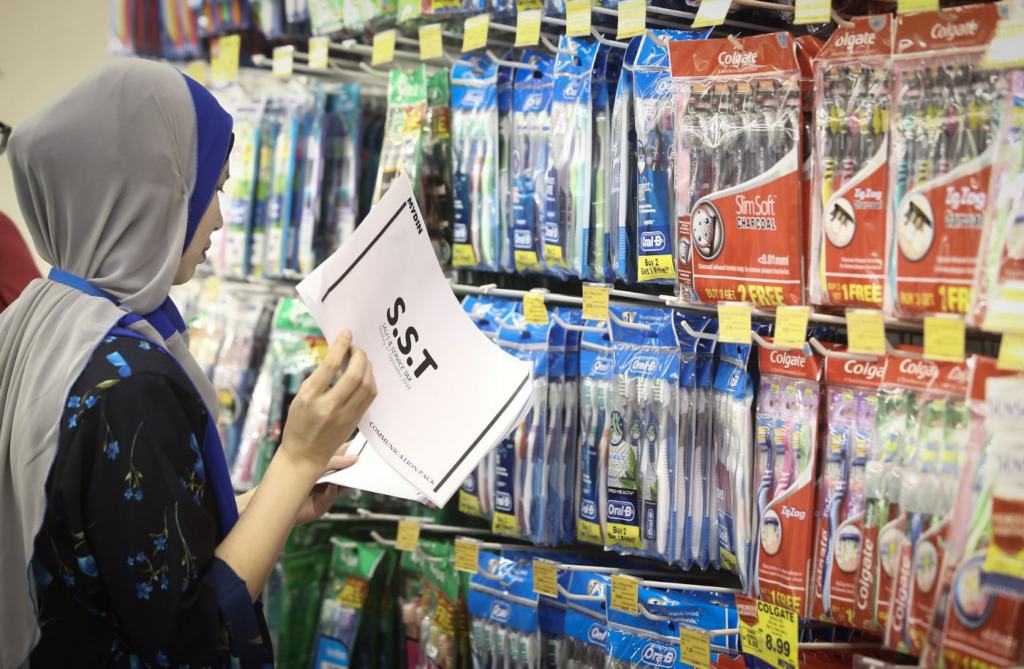
GST was introduced in Malaysia in April 2015 at a rate of 6%, before being abolished three years later following public backlash
The multi-stage consumption tax was abolished and zero-rated on 1 June 2018, before SST was reintroduced on 1 September 2018, in line with the manifesto of the then Pakatan Harapan-led administration.
The government has repeatedly dismissed calls to reinstate GST in its previous form.
In June last year, Anwar said GST would only be considered when Malaysia's minimum wage exceeded RM4,000.
However, in December last year, Barisan Nasional (BN) chairman and UMNO president Datuk Seri Dr Ahmad Zahid Hamidi said the coalition would push for GST to be reinstated after the 16th General Election.
Zahid, who is also Deputy Prime Minister, described GST as the best tax regime to ensure fairness and strengthen national revenue, while saying BN was prepared to allow the existing SST system to continue for the time being.
For now, the Cabinet's decision does not amount to a reinstatement of GST.
The Finance Ministry has been tasked with studying whether selected GST mechanisms can be incorporated into SST before the government decides what, if anything, should change.
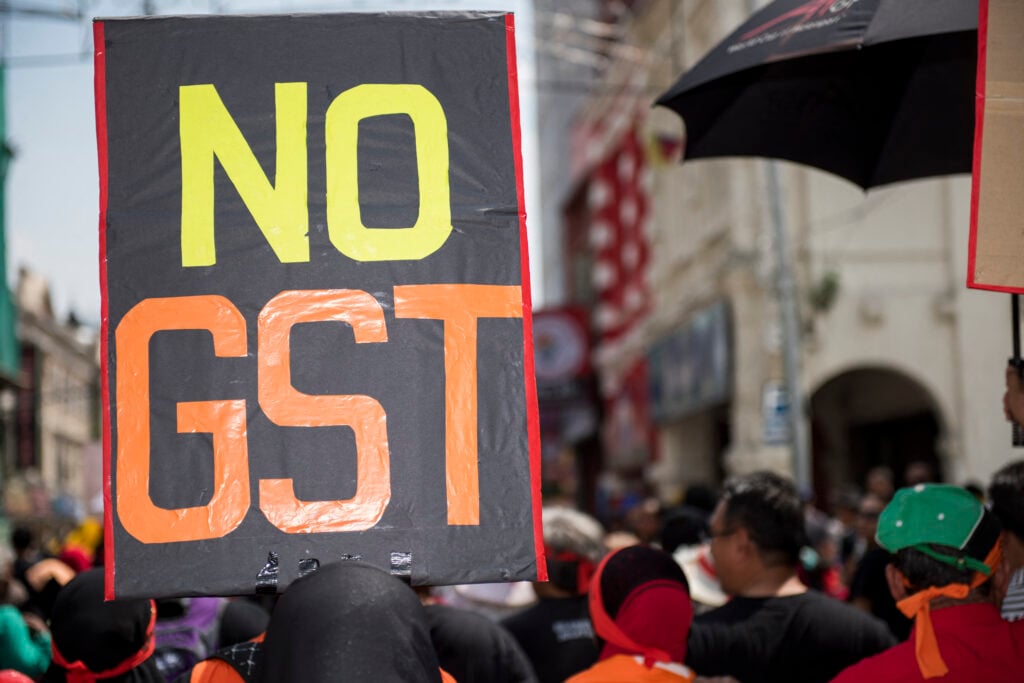
File photo of anti-GST rally in Kuala Lumpur city centre calling for the tax to be abolished on 2 April 2016.
Image via Chris Jung/NurPhoto/AFP