
Nearly 62% Of EPF Contributors Haven’t Even Hit The Basic Savings Target Yet
The number of contributors meeting the Basic Savings benchmark has increased, but nearly six in 10 active EPF members are still falling short.


 Cover image via New Straits Times
Follow us on Instagram, TikTok, and WhatsApp for the latest stories and breaking news.
While more Malaysians are meeting the Employees Provident Fund's (EPF) Basic Savings benchmark than a year ago, the latest figures shared in Parliament show that a majority of active contributors are still falling short
Deputy Finance Minister Liew Chin Tong told the Dewan Rakyat this week that, as of 31 May 2026, 3.04 million active EPF members aged between 18 and 60 had achieved their age-based Basic Savings target.
"As of May 31, 2026, a total of 3.04 million formal active Malaysian members aged between 18 and 60, or 38.3% of the total 7.94 million members in that category, have achieved the Basic Savings target by age, which is RM390,000 at age 60," he said.
The figure is an improvement from the 2.71 million members (35%) who had reached the benchmark a year earlier.
However, the same data also shows that 61.7% of active contributors, or about 4.9 million people, have yet to meet their Basic Savings target.
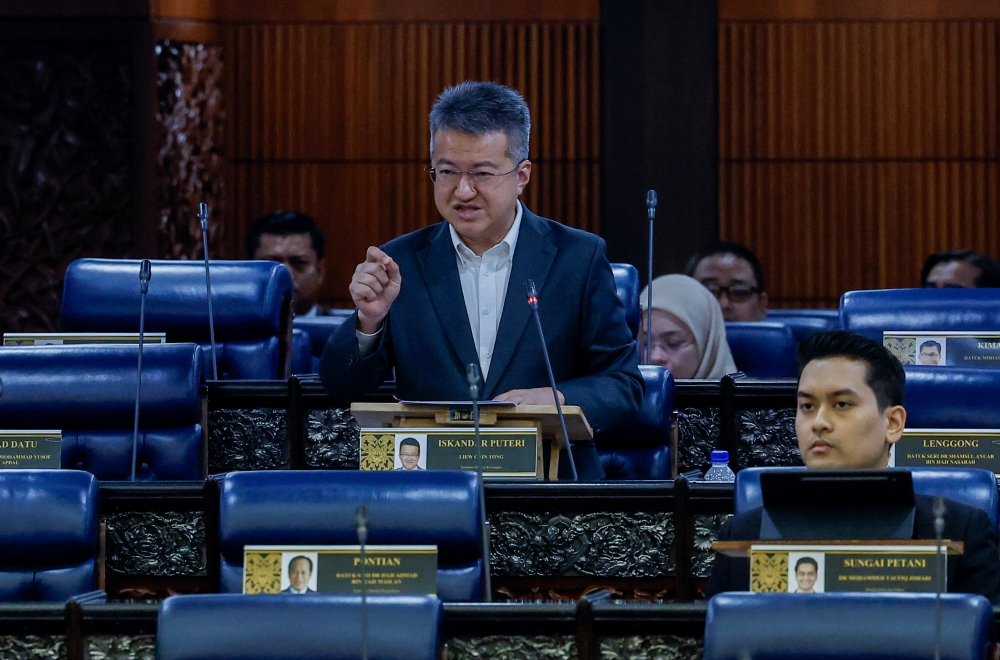
Deputy Minister of Finance Liew Chin Tong.
Image via BernamaWhat exactly is the Basic Savings target?
EPF's Basic Savings framework aims to help members accumulate RM390,000 by the time they turn 60.
The fund estimates that this amount should provide sufficient income for the next 20 years of retirement, from age 60 to 80.
Broken down evenly, that works out to about RM1,625 a month.
It's important to note that RM390,000 is not EPF's highest retirement goal.
The fund's three retirement savings tiers are:
- Basic Savings: RM390,000
- Adequate Savings: RM650,000
- Enhanced Savings: RM1.3 million
In other words, Basic Savings is designed to cover essential retirement needs, while the higher tiers are intended to provide greater financial security and flexibility.
According to the government, new initiatives are helping boost retirement savings
Liew attributed the improvement to several initiatives introduced by the government and EPF, including i-Saraan Plus for gig workers and self-employed Malaysians, i-Simpan, i-Topup, and the newly introduced i-Legasi programme.
Here's what each initiative does:
- i-Saraan Plus, a voluntary contribution scheme for gig workers, e-hailing drivers, delivery riders and other self-employed individuals.
- i-Simpan, which allows members to make voluntary contributions of up to RM100,000 a year.
- i-Topup, which enables employees and employers to contribute above the statutory EPF contribution rate.
- i-Legasi, introduced in February this year, which allows eligible members aged 55 and above with more than RM650,000 in EPF savings to transfer surplus savings into their children's EPF accounts.
These initiatives give Malaysians more ways to grow their retirement savings, whether through voluntary contributions, higher employer contributions, or intergenerational transfers.
But questions remain over whether people can afford to save amid the rising cost of living
For many Malaysians, the challenge may not simply be the availability of savings schemes, but having enough income left over to contribute consistently in the first place.
Workers whose earnings barely cover housing, food, transport, childcare, and other daily expenses may find it difficult to make additional voluntary contributions, even when programmes such as i-Simpan and i-Saraan Plus are available.
The same can apply to self-employed individuals and gig workers, whose incomes may fluctuate significantly from month to month, making regular retirement contributions more challenging than for workers with fixed salaries.
Even among formally employed Malaysians, higher living costs can reduce the amount available for voluntary savings beyond mandatory EPF deductions.
Career interruptions, prolonged unemployment and time spent outside the formal workforce can also interrupt EPF contributions, slowing the growth of retirement savings over time. The ability to consistently set aside money over decades is another key factor.
While the parliamentary figures cover 7.94 million active formal contributors, they do not include inactive members who are no longer contributing regularly, nor do they fully reflect Malaysians whose work histories have been interrupted.
With nearly six in 10 active contributors still below the Basic Savings benchmark, expanding savings schemes is only one part of the equation.
Whether more Malaysians can build adequate retirement savings will also depend on whether they have access to stable employment and enough disposable income to save consistently throughout their working lives.