
Malaysia’s Unemployment Rate Rises With Over Half A Million Malaysians Now Out Of Work
The latest figures show that economic growth does not necessarily translate into lower unemployment.


 Cover image via Agoes Rudianto/NurPhoto/AFP
Follow us on Instagram, TikTok, and WhatsApp for the latest stories and breaking news.
More than half a million Malaysians are now unemployed as of April 2026, as the country's unemployment rate climbed for the first time in six months, according to new data from the Department of Statistics Malaysia (DOSM)
The unemployment rate rose to 3.0% from 2.9% in March, pushing the number of unemployed people to 511,800, an increase of nearly 3,000 individuals in a single month and the highest level recorded since October last year.
While the increase was relatively small, it comes at a time when Malaysia's economy is expanding, exports are surging, and businesses continue hiring, highlighting growing questions about whether job creation is keeping pace with the changing needs of the workforce.
| Labor Market Indicator | March 2026 | April 2026 | MoM Change |
|---|---|---|---|
| Unemployment Rate | 2.9% | 3.0% | +0.1 pp |
| Unemployed Persons | 509.0k | 511.8k | +0.6% (+2.9k) |
The latest figures suggest that while the broader economy continues to expand, not everyone is feeling the benefits equally
Of the 511,800 unemployed individuals, nearly four in five were actively looking for work and available to start immediately. This group, known as the actively unemployed, accounted for 407,100 people or 79.5% of all unemployed Malaysians.
Meanwhile, the number of people who were not actively seeking jobs because they believed suitable opportunities were unavailable rose at a faster pace. This group increased by 1.5% to 104,700 people, making up one-fifth of the country's unemployed population.
The data also showed that most unemployed Malaysians were still relatively new to joblessness. Nearly two-thirds had been unemployed for less than three months.
However, there were also signs that longer-term unemployment is creeping upward.
The share of active job seekers who had been unemployed for six months or longer increased slightly, including those who had spent more than a year looking for work.
Young Malaysians continued to bear the heaviest burden
The unemployment rate among those aged 15 to 24 remained unchanged at 10.2%, more than three times the national average. In absolute terms, 290,800 youths in this age group were unemployed.
The broader 15-to-30 age group saw a worsening picture. Its unemployment rate rose to 6.3% from 6.2% in March, while the number of unemployed individuals in the category climbed to 394,700.
That means more than three-quarters of all unemployed people in Malaysia were aged 30 and below.

People walk at Bukit Bintang shopping area in Kuala Lumpur.
Image via Agoes Rudianto/NurPhoto/AFPThe increase in unemployment came despite signs that the economy remains resilient
Malaysia's gross domestic product (GDP) expanded by 5.4% in the first quarter of 2026, accelerating from 4.9% growth recorded in the previous quarter and exceeding earlier forecasts.
External trade also remained strong. Exports surged 22.8% in April, while imports jumped 23.9%, reflecting continued economic activity both domestically and abroad.
Employment itself continued to grow, with the number of employed persons rising to 16.82 million.
The services sector remained the country's largest source of jobs, particularly in wholesale and retail trade, accommodation and food and beverage services, as well as information and communication activities.
Manufacturing, construction, agriculture, and mining and quarrying also recorded employment gains during the month.
According to DOSM, seasonal events such as the April MATTA Fair helped generate temporary demand for workers across tourism, hospitality, retail, and transportation-related industries.
However, the department also pointed to a number of risks that could weigh on hiring momentum in the months ahead.
Among them are ongoing geopolitical tensions in West Asia, which continue to disrupt global energy supply chains and contribute to higher fuel and shipping costs.
While Malaysia stands to benefit from higher energy prices as a net exporter, businesses that rely heavily on imported materials and energy-intensive operations could face rising costs that may eventually affect recruitment plans.
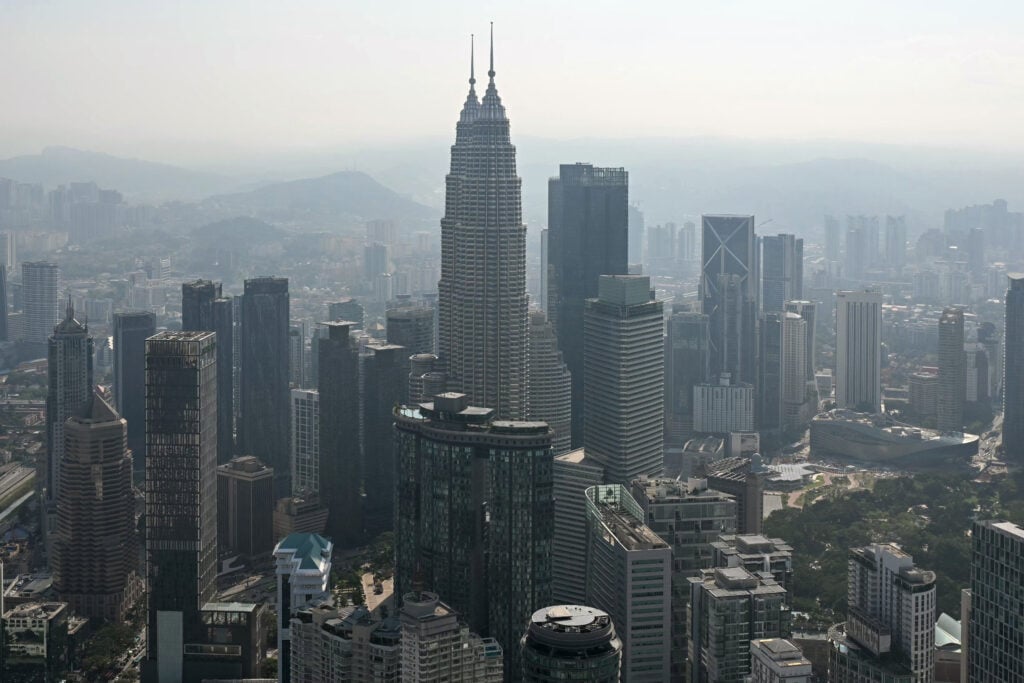
Petronas Twin Towers is seen amongst commercial buildings in Kuala Lumpur.
Image via Mohd Rasfan/AFPDOSM also highlighted the growing impact of automation, digitalisation and artificial intelligence on the labour market
As businesses increasingly adopt new technologies, demand is shifting towards workers with higher-value technical and knowledge-based skills, while some lower-skilled roles face mounting pressure.
The department said continuous upskilling and reskilling would be crucial to ensure workers remain competitive as the economy undergoes a structural transformation.
For now, Malaysia's unemployment rate remains low by historical standards.
But with more than half a million people still looking for work and youth unemployment remaining persistently elevated, April's figures serve as a reminder that a growing economy does not automatically translate into lower unemployment.
And as more Malaysians enter the workforce and structural shifts reshape hiring patterns, keeping job creation ahead of labour supply may become a more challenging task in the months ahead.

Read more trending stories on SAYS
Malaysian Government Bans Public Servants From Using Waze Over Data Security Concerns
As an alternative, public servants and road users are encouraged to adopt TuJu, a locally developed navigation app.