
“How Did 25kg Of Drugs Get Past KLIA?” Veteran Pilots Demand Answers After M’sian Pilot’s Arrest
Malaysia's aviation industry is calling for an urgent review of airport security after a Malaysian pilot was allegedly caught smuggling 25kg of ecstasy pills into Indonesia.


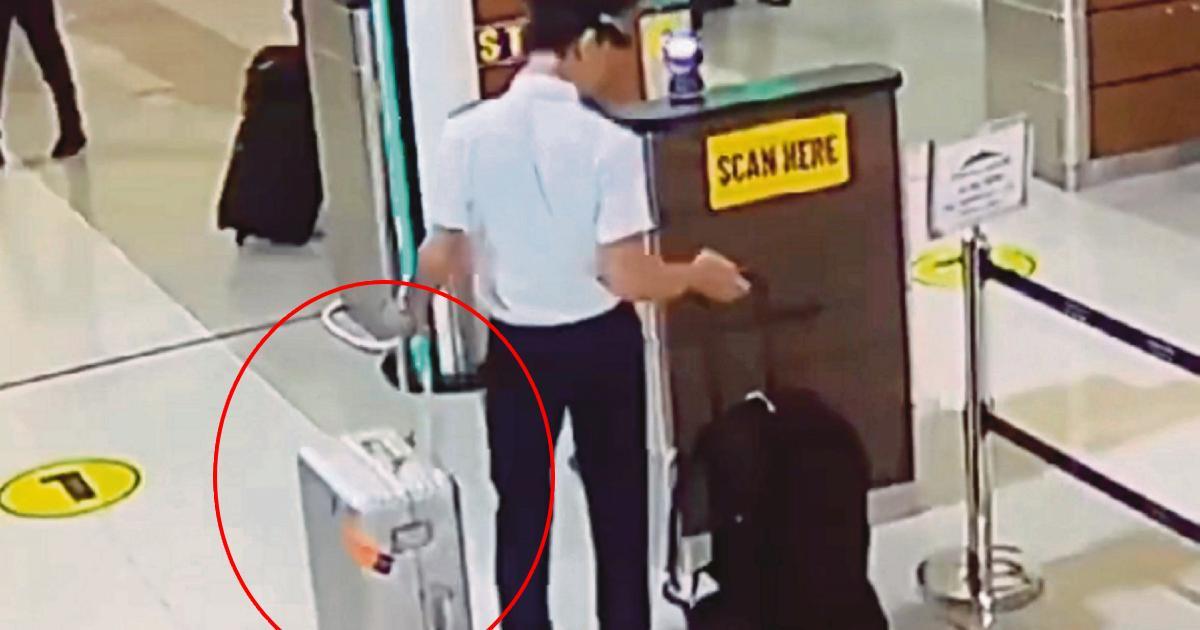 Cover image via @bcsoetta (Instagram)
Follow us on Instagram, TikTok, and WhatsApp for the latest stories and breaking news.
Veteran pilots say someone needs to explain how the drugs got through
The arrest of a Malaysian pilot in Jakarta has sparked uncomfortable questions back home, with senior aviation figures asking how luggage allegedly containing more than 70,000 ecstasy pills managed to pass through multiple layers of security screening at Kuala Lumpur International Airport (KLIA).
Speaking to the New Straits Times, former Malaysia Airlines chief pilot Datuk Captain Nik Ahmad Huzlan Nik Hussain said the issue is no longer simply about the pilot's alleged actions.
Instead, he said investigators must determine where the security chain failed.
"The question is not whether the system exists. It does," he said.
"The question is how the bag got through despite multiple layers of security."
Among the questions he believes investigators must answer are:
- Whether the pilot underwent the standard crew security screening at KLIA.
- Whether his baggage passed through the designated screening lane.
- Whether there was any opportunity for normal procedures to be bypassed.
- Whether the difference between KLIA and Jakarta lay in the screening technology itself or how officers interpreted the X-ray images.
Nik Ahmad also warned that while flight crew often receive expedited processing to ensure flights depart on time, operational efficiency should never come at the expense of security.

Datuk Captain Nik Ahmad Huzlan Nik Hussain.
Image via New Straits TimesThey also said that random crew checks may now be necessary
Another veteran pilot, who spoke to the English newspaper on condition of anonymity, warned that organised criminal syndicates constantly look for predictable weaknesses in aviation security systems.
"If organised syndicates found a way to exploit a predictable system once, they will try again."
He said airports should introduce more frequent random security screening for flight crew, rather than relying solely on existing procedures.
Nik Ahmad also pointed to the 2019 Garuda Indonesia smuggling scandal, in which Customs officers discovered a Harley-Davidson motorcycle and Brompton bicycles hidden aboard a newly delivered aircraft, as an example of aviation personnel being exploited in smuggling operations.
The case has also reignited debate over how airlines monitor pilots for drug use
According to another aviation industry insider interviewed by the New Straits Times, annual medical examinations are no longer enough because many modern synthetic drugs leave the body quickly.
"Scheduled testing is predictable," he said.
Without unannounced random drug screening, he argued, detecting substances such as MDMA becomes significantly harder.
The source also claimed some pilots may resort to stimulants to cope with the demanding nature of the profession, making surprise testing a stronger deterrent.
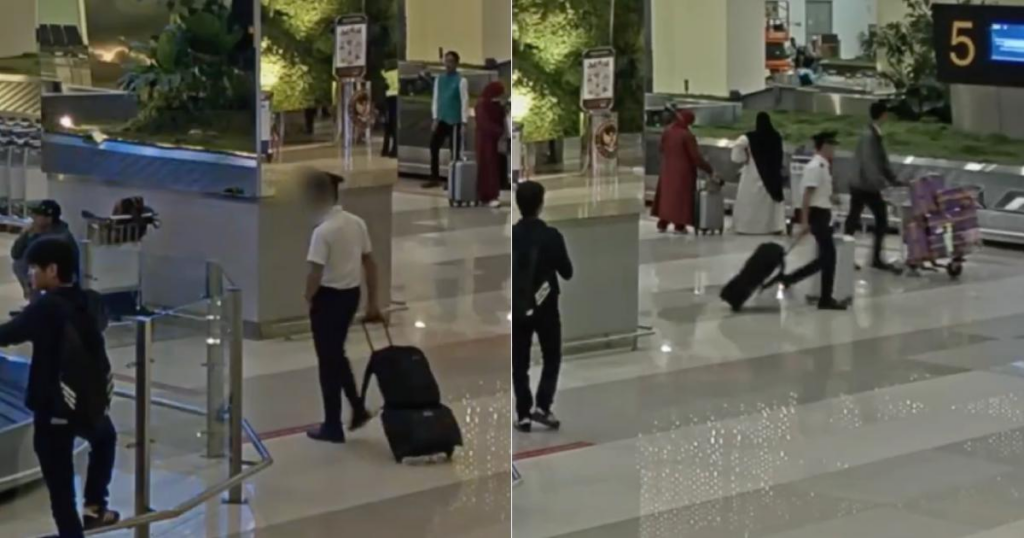
The Malaysian pilot as seen in the CCTV footage released by the Soekarno-Hatta Customs and Excise Office.
Image via @bcsoetta (Instagram)There are also questions being raised about mental health screening for pilots
Beyond drug testing, industry insiders said the incident has exposed another potential weakness: the lack of structured psychological screening within the profession.
According to one veteran pilot, commercial pilots are primarily assessed on their technical ability, while personality traits and behavioural concerns are rarely formally documented if operational standards are met.
The source described the arrested pilot as someone known in aviation circles for having "a temperament", but said that alone would not have prevented him from qualifying as a commercial pilot.
He also claimed there are no formal peer-reporting mechanisms or comprehensive mental wellness programmes for flight crew.
Instead, the closest thing to a psychological assessment during annual medical examinations is a brief conversation with the examining doctor.
The insider added that while pilots are allowed to take medical leave for mental health reasons, workplace culture often discourages them from doing so.
Meanwhile, the Malaysian Pilots Association (MPA) has called the incident a "double embarrassment"
MPA president Captain Ab Manan Mansor said he felt "very, very embarrassed" by the allegations.
"Coming from the national airline is a double embarrassment," he told the New Straits Times.
He urged airlines to strengthen employee monitoring, including random urine tests for both flight crew and ground staff.
He also questioned why the suspect remained a second officer at the age of 39, noting that many pilots from the same airline company would have reached captain rank by then.
Manan also called on both the airline and the Transport Ministry to publicly explain what additional safeguards would be introduced to prevent similar incidents.
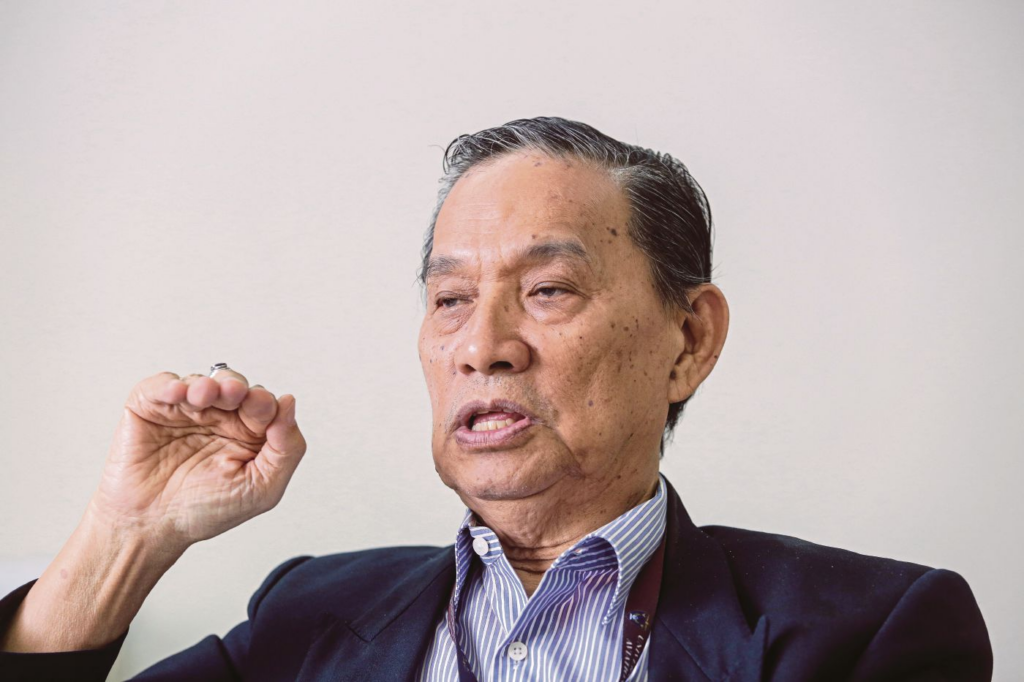
Captain Ab Manan Mansor.
Image via New Straits TimesThe pilot was arrested after Indonesian Customs allegedly found over 70,000 ecstasy pills in his luggage
The Malaysian pilot was arrested by Indonesian authorities at Soekarno-Hatta International Airport on 28 July after Customs officers allegedly discovered 15 packets containing 70,114 ecstasy pills hidden inside his luggage.
Authorities estimate the drugs have a street value of around RM45 million in Indonesia.
Indonesian investigators also said the pilot tested positive for methamphetamine, MDMA, and cocaine.