
Insurance Company Ordered To Pay Cancer Claim After KL Court Finds No Evidence Of Fraud
The Kuala Lumpur High Court ordered the insurer to pay RM100,000, cover cancer treatment costs, and reinstate the original policy.


 Cover image via Sadiq Asyraf/AFP
Follow us on Instagram, TikTok, and WhatsApp for the latest stories and breaking news.
A Malaysian woman whose cancer insurance claim was rejected over alleged non-disclosure of medical information has won her case in the Kuala Lumpur High Court
The High Court ruled that omissions in the insurance application resulted from poor communication and errors during the application process, rather than an intentional attempt to conceal information.
It ordered the insurer to pay RM100,000 in critical illness benefits and to cover her cancer-related medical expenses.
According to China Press, the case involved a couple identified in court documents as Tan Hong Feng and Arnold (transliterations), who purchased life and medical insurance policies through an insurance agent in 2021.
In June 2023, Tan was diagnosed with endometrioid adenocarcinoma, a type of uterine cancer, as well as uterine fibroids.
After receiving a hospital Letter of Guarantee request, the insurer conducted an audit and discovered that the health declaration submitted during the application process did not fully disclose several details, including the cancer history of Tan's mother and sister, as well as her own medical history involving mild anaemia, trigeminal neuralgia, and two benign uterine fibroids diagnosed in 2019.
The insurer subsequently alleged fraudulent misrepresentation
It demanded a 50% premium loading and excluded coverage for uterine fibroids, anaemia, trigeminal neuralgia and cancer.
The company eventually declared the rider policy void from the outset.
However, High Court Judicial Commissioner Elaine Yap Chin Gaik ruled that the evidence did not support allegations that the plaintiffs had deliberately concealed information or acted fraudulently.
In her judgment, Yap noted that under the Financial Services Act 2013, an insurer seeking to cancel a life insurance policy that has been in force for more than two years must prove that the policyholder intentionally withheld information or knowingly made false statements with fraudulent intent.
The court found that the application form had been completed by the insurance agent on behalf of the couple and that the agent did not go through the questions individually with them.
According to the judgment, the plaintiffs had disclosed some aspects of their medical history, but the agent was unfamiliar with the relevant medical conditions and did not know how to properly record them in the application.
The court also noted that the plaintiffs relied on the agent and did not carefully review every term before signing, while the agent failed to ensure that all mandatory information was fully disclosed.
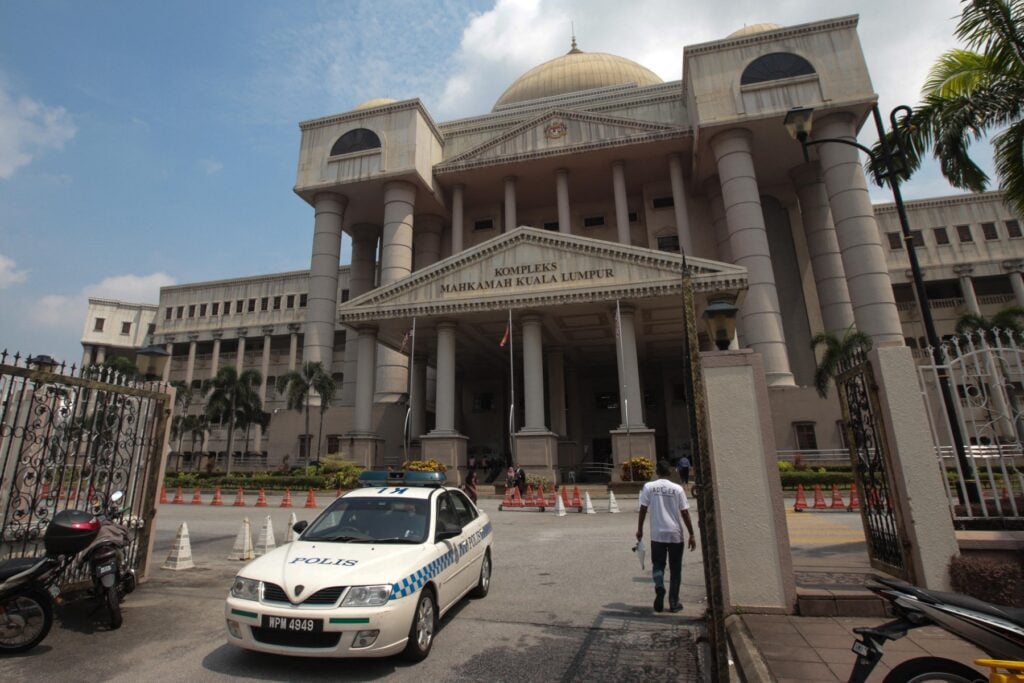
The Kuala Lumpur High Court.
Image via Sadiq Asyraf/AFPWhile the court agreed that there had been negligence in the declaration process, it said it was insufficient to establish intentional concealment, fraud, or reckless misrepresentation
The judicial commissioner described the omissions as innocent mistakes arising from communication failures rather than deliberate wrongdoing.
She further criticised the insurer's handling of communications after amendments were made to the policy.
According to the judgment, the plaintiffs repeatedly sought clarification on whether Tan's cancer remained covered under the policy, but did not receive a direct answer.
Yap described the insurer's responses as "evasive".
The court ordered the insurer to reinstate the original policy, pay RM100,000 in critical illness benefits, cover cancer-related medical expenses, and pay interest at a rate of 8% per year from the date of judgment until full settlement.
The insurer was also ordered to pay RM15,000 in legal costs.
However, the court dismissed the plaintiffs' claim for emotional distress damages, ruling that the dispute arose from a contract and that Malaysian contract law generally does not allow compensation for emotional or psychological suffering in such cases.
