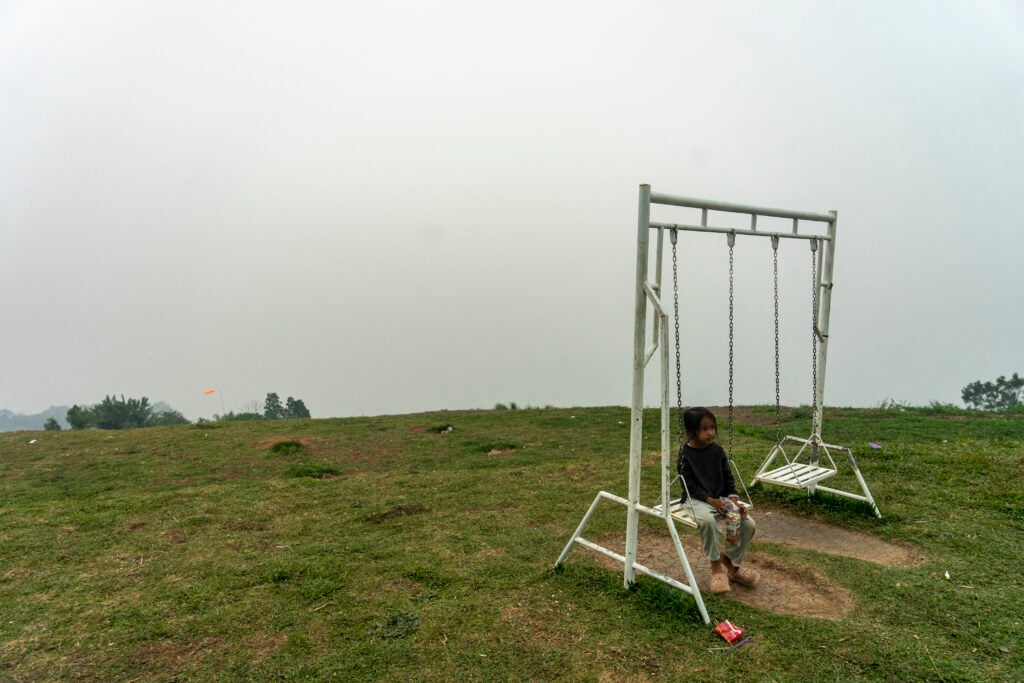
Indonesia Downplays Haze Crisis, Claiming Its Forests Also “Send Oxygen” To Malaysia & Singapore
Indonesia's top government communications official also described the forest fires as a natural phenomenon.


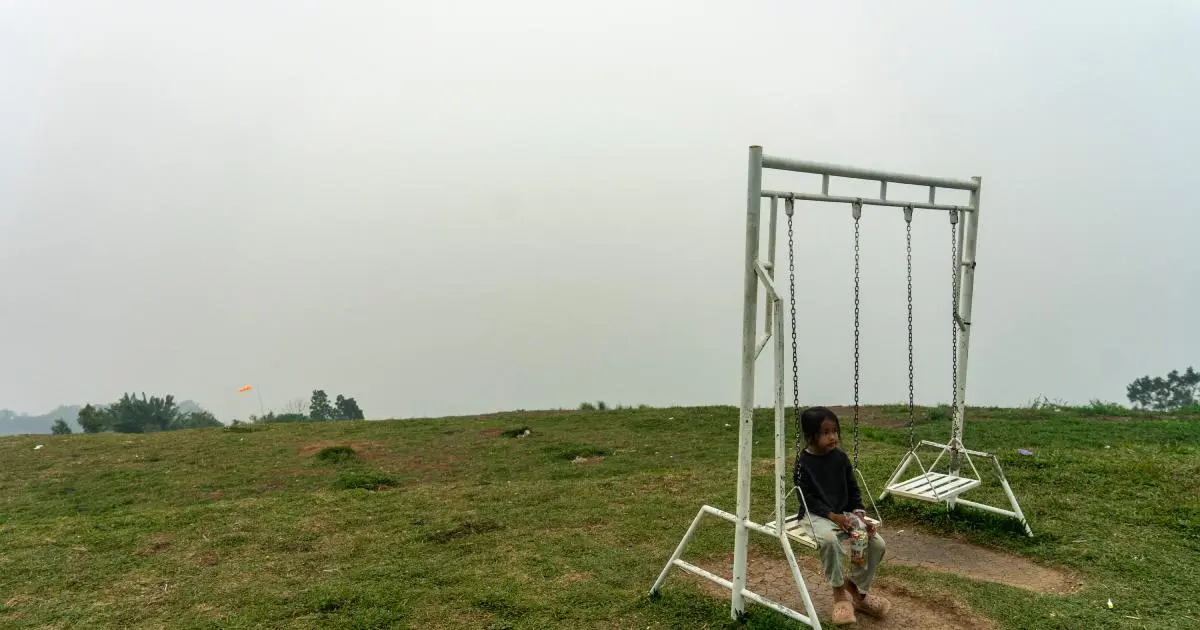 Cover image via Mas'ud Kurniawan/NurPhoto/AFP
Follow us on Instagram, TikTok, and WhatsApp for the latest stories and breaking news.
Indonesia's top government communications official has urged Malaysia and Singapore to understand that the country's forest fires are a natural phenomenon
Syahganda Nainggolan, head of Indonesia's Government Communication Agency (BAKOM), made the remarks on Saturday, 10 October, as transboundary haze continued to affect neighbouring countries.
His comments have since drawn criticism online, particularly over his characterisation of the fires as a natural occurrence and his claim that Indonesian forests supply oxygen to Malaysia and Singapore.
The backlash comes as residents across the region continue to deal with worsening air pollution, while Malaysia has offered to help Indonesia extinguish the fires.
Speaking at the National Resilience Institute (Lemhannas) office in Jakarta, Syahganda said the Indonesian government understood the concerns raised by Malaysia and Singapore over the haze. However, he argued that the forest and land fires, known in Indonesia as karhutla, were a natural phenomenon rather than the result of human error.
"So, we also ask all our neighbours to understand that this is beyond human error; this is truly nature," he said, as quoted by Indonesian news outlet Kompas.com.
He also sought to reassure the public that relations between Indonesia and Malaysia remained good, adding that the government was explaining the situation and its response to both countries.
His remarks come amid an ongoing regional haze crisis that has left communities struggling with unhealthy air quality and disrupted everyday activities.
While hot, dry weather and the El Niño phenomenon can increase the likelihood of fires and make them harder to contain, these conditions do not establish that the fires are entirely natural.
Environmental groups have repeatedly highlighted the roles of land clearing, vulnerable peatlands, and inadequate fire prevention in recurring haze crises.
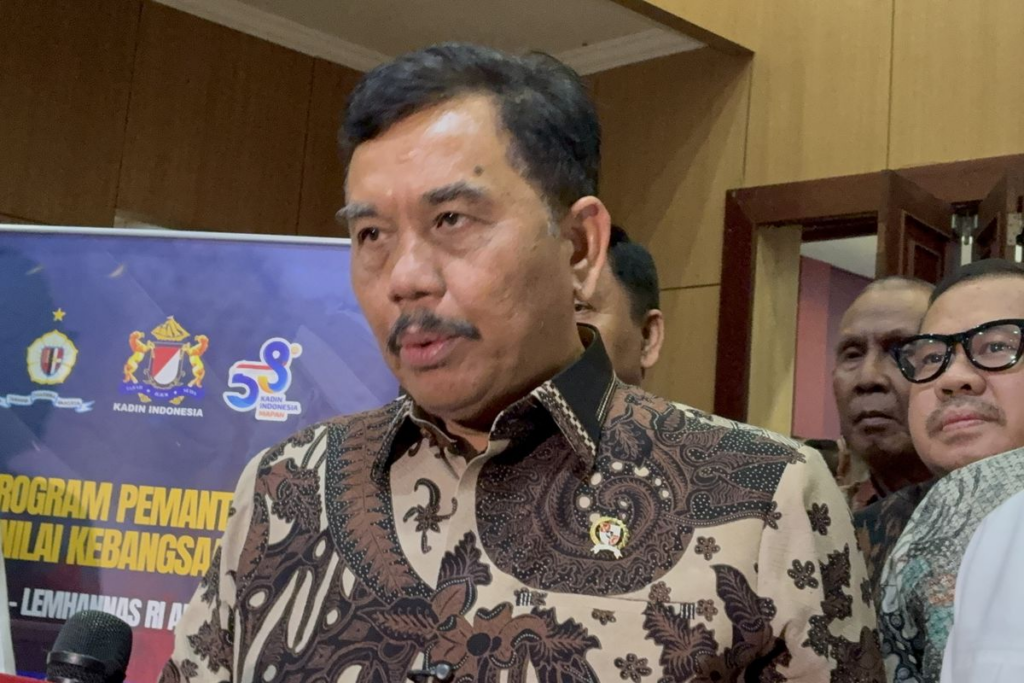
Head of the Indonesian Government Communication Agency (BAKOM), Syahganda Nainggolan.
Image via Haryanti Puspa Sari/Kompas.comSyahganda's comments drew further criticism when he claimed that Malaysia and Singapore also benefited from Indonesia's forests
"We do not only send smoke, but when there is no smoke, we send oxygen. The oxygen in Singapore and Malaysia comes from our forests," he said.
The remark drew criticism for presenting Indonesia's forests as a source of oxygen for neighbouring countries while those same countries were dealing with the consequences of smoke drifting across national borders.
However, the implication that Indonesia's forests supply Malaysia and Singapore with their oxygen overlooks the much larger role the ocean plays in global oxygen production.
According to the US National Oceanic and Atmospheric Administration (NOAA), roughly half of Earth's oxygen production comes from the ocean, largely through microscopic organisms known as phytoplankton, alongside algae and certain bacteria.
These organisms use photosynthesis to convert sunlight, carbon dioxide and water into energy, releasing oxygen in the process. One of them, a microscopic cyanobacterium called Prochlorococcus, is estimated to account for up to 20% of oxygen production in the biosphere. That is more than the contribution of all tropical rainforests combined, according to NOAA.
However, the bigger misconception is that a forest producing oxygen automatically supplies a significant net supply of it to neighbouring countries.
Forests release oxygen through photosynthesis, but trees, animals, and microorganisms also consume oxygen through respiration. Decomposition also uses oxygen, as does the burning of vegetation during fires.
In a mature forest, oxygen production and consumption largely balance out over time. This means its net contribution to atmospheric oxygen can be small, even though the forest remains essential to the environment.
The oxygen in the air that Malaysians and Singaporeans breathe is part of a vast global atmospheric reservoir that has accumulated over hundreds of millions of years. It is not a fresh supply delivered directly from a neighbouring country's forests.
Meanwhile, Indonesia's fires have continued to threaten communities and wildlife.
Reuters reported on 11 October that authorities had relocated eight critically endangered orangutans after fires destroyed their forest habitats in Borneo. The fires have piled pressure on the already endangered species and forced local groups to carry out high-stakes rescues of animals suffering smoke inhalation and burns.
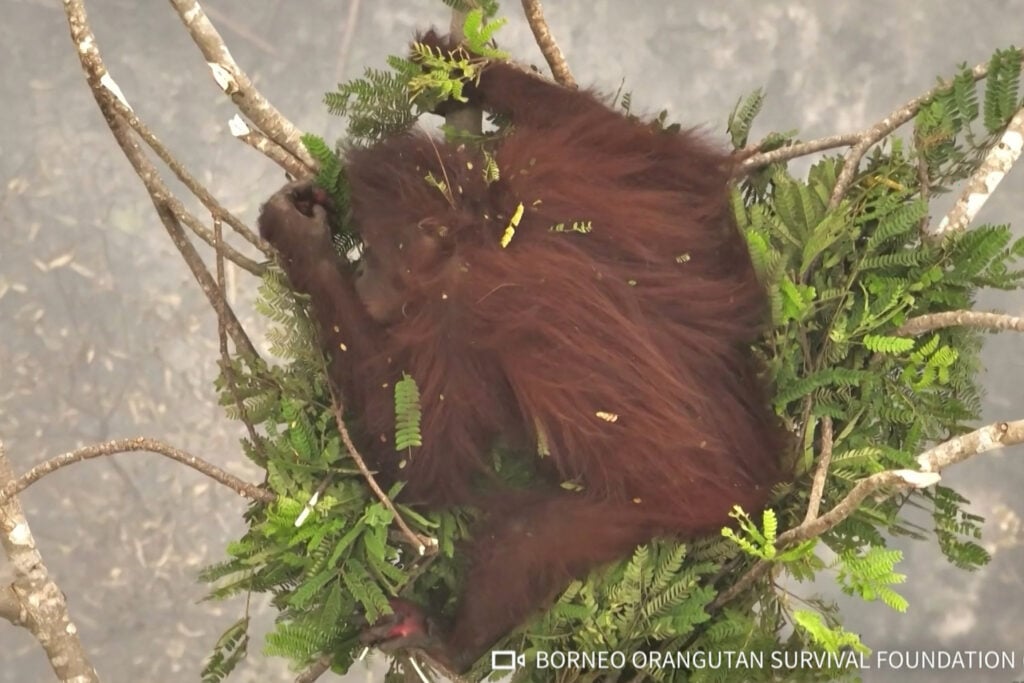
This screengrab from a Borneo Orangutan Survival Foundation (BOSF) video shows an orangutan named Novita resting in a tree amid haze from forest fires in Central Kalimantan on 26 September.
Image via Borneo Orangutan Survival Foundation/AFPHis comments have since attracted criticism from social media users
Some even questioned the level of scientific understanding demonstrated by a government representative tasked with communicating Indonesia's position.
One commenter described the response as shockingly uneducated, questioning why an official would frame the issue in such a way while neighbouring countries were struggling with the haze.
Another criticised Indonesian leaders over the recurring fires, arguing that the damage extends beyond air pollution to the destruction of animal habitats and entire ecosystems.
Others pointed to the apparent contradiction of invoking Indonesia's forests as a source of oxygen while asking countries affected by its fires to be understanding.
The criticism reflects broader frustration with a problem that repeatedly affects Southeast Asia, forcing residents to contend with polluted air, restricting outdoor activities and, in some places, disrupting schooling and daily life.