
Honda Installs RM14 Million Rooftop Solar System At Melaka Assembly Plant
It's enough to offset the carbon emissions of approximately 1,000 petrol-powered cars.


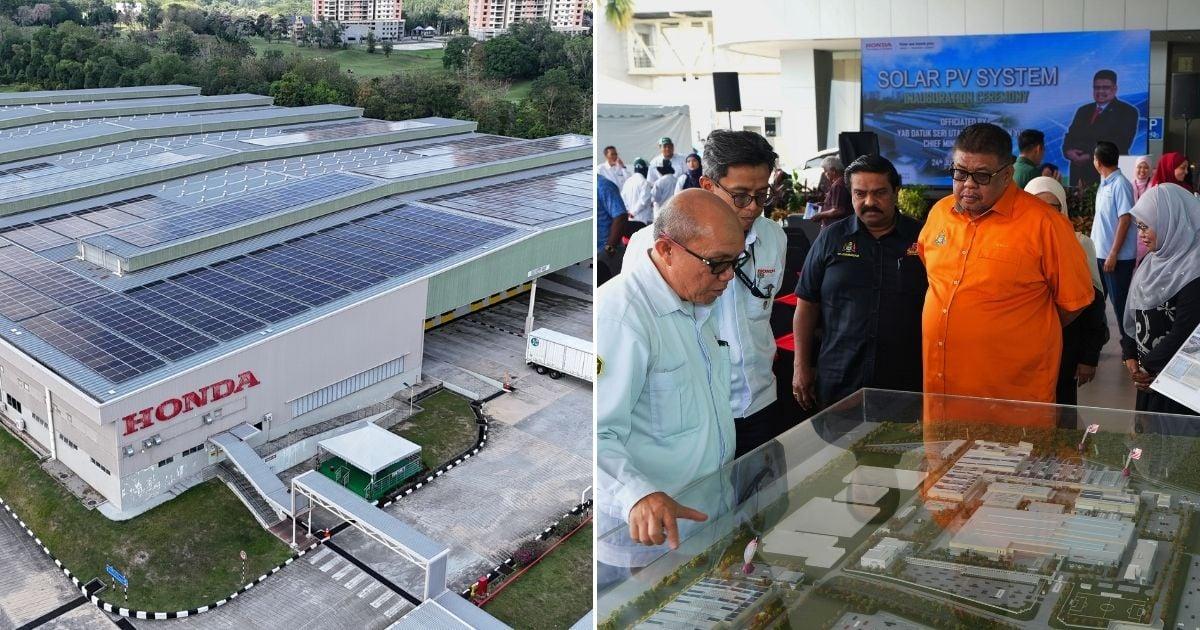 Cover image via Honda Malaysia (Provided to SAYS)
Follow us on Instagram, TikTok, and WhatsApp for the latest stories and breaking news.
Honda Malaysia officially commemorated the completion of its first rooftop solar power initiative at its primary assembly plant in Alor Gajah, Melaka
Officiated by Melaka Chief Minister Datuk Seri Ab Rauf Yusoh, the RM14 million self-funded project marks a major milestone towards the carmaker's global target of achieving complete carbon neutrality across all corporate activities and products by 2050.

The massive green infrastructure project features 8,960 solar panels across the facility's rooftops, delivering an installed capacity of over 5.6 megawatts (MW)
Annually, the array will generate approximately 7,042 megawatt-hours (MWh) of renewable electricity.
Alongside the solar panels, Honda has installed a Battery Energy Storage System (BESS), making it an industrial pioneer among electricity consumers in Malaysia.
The BESS unit captures excess daytime solar energy and stores it for high-demand operating hours, ensuring a steady power supply for vehicle manufacturing while earning the plant a 3.07-star rating under the Climate and Sustainability Industry Readiness Index (COSIRI).
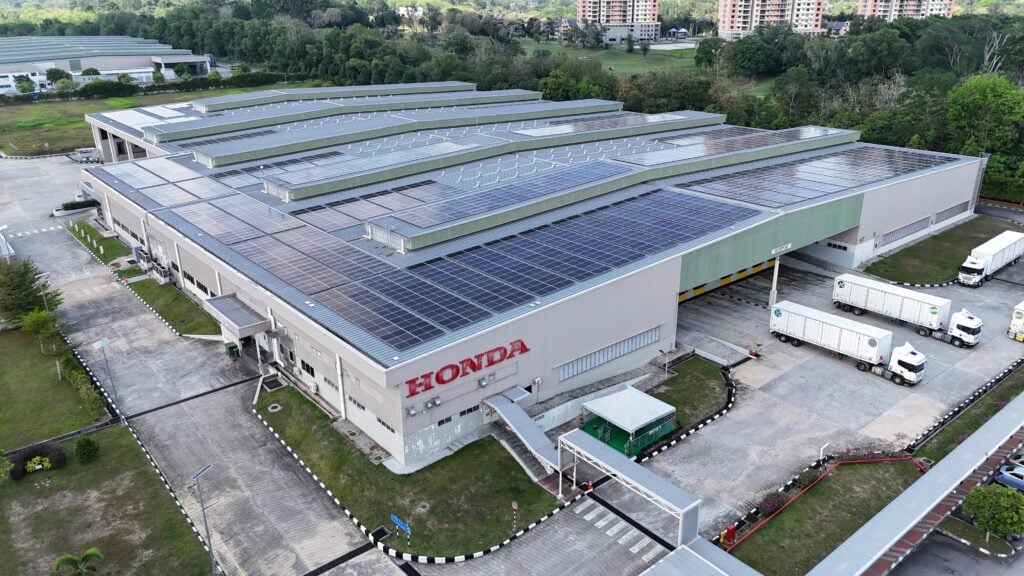
To put 7,042 MWh of clean electricity into perspective, that single year of solar production generates enough power to run approximately 1,670 typical Malaysian households for 12 months
Alternatively, if converted into personal gadget use, that energy output could fully charge nearly 470 million smartphones, enough to recharge every mobile phone in Malaysia more than a dozen times over.
Similarly, the environmental payoff carries tangible real-world benefits. By generating its own clean electricity, the Melaka plant will slash its annual carbon dioxide emissions by 4,584 tonnes, cutting the facility's total carbon footprint by 10%.
In practical terms, eliminating 4,584 tonnes of carbon emissions every year is the ecological equivalent of taking roughly 1,000 petrol-powered passenger cars off Malaysian roads.
Viewing through nature's lens, achieving that same carbon reduction would require planting and nurturing more than 220,000 mature trees.
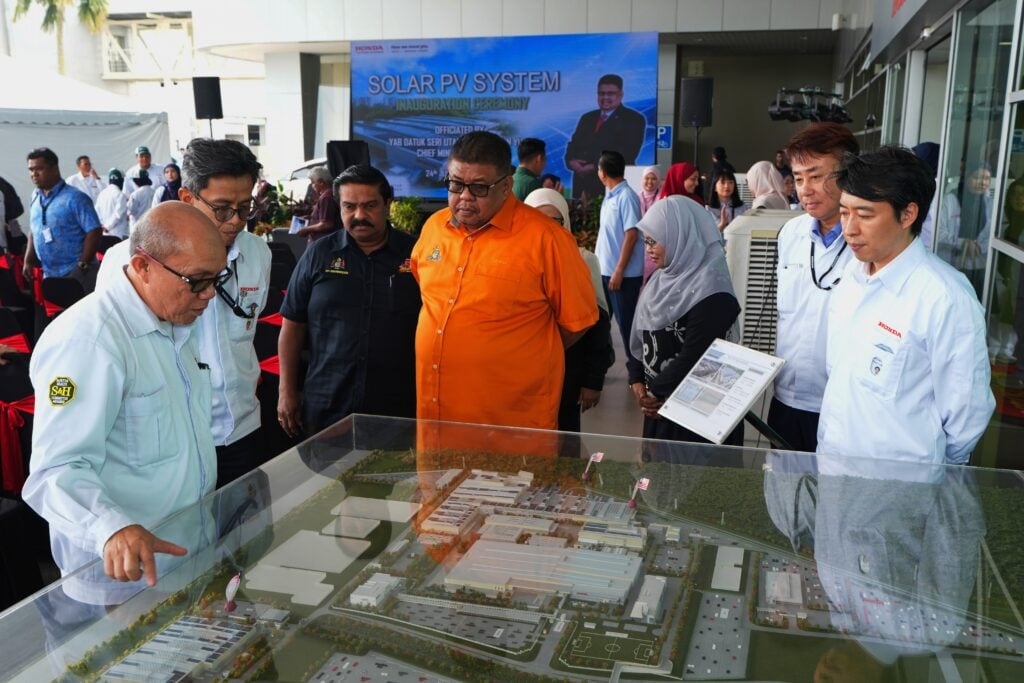
The RM14 million investment, supported by the government's Green Investment Tax Allowance (GITA) framework, highlights how public-private partnerships are accelerating Malaysia's industrial green transition
Honda Malaysia Managing Director and Chief Executive Officer Narushi Yazaki emphasised that business growth and environmental stewardship must move hand-in-hand.
Building on this momentum, the carmaker plans to extend its solar infrastructure to its central Parts Supply Warehouse in Bukit Jelutong, Shah Alam, in 2027.
This rooftop initiative also complements Honda's growing portfolio of e:HEV hybrid vehicles on local roads, pairing clean assembly practices with fuel-efficient mobility solutions.
