
Palantir’s AI Error Led To The Death Of 123 Children In US Bombing Of Iran, Report Finds
An internal Pentagon review links a tragic US missile strike on an Iranian school to AI overreliance and outdated data.


 Cover image via
 Follow us on Instagram, TikTok, and WhatsApp for the latest stories and breaking news.
An unreleased US Defence Department review has concluded that preventable human errors and an overreliance on artificial intelligence (AI) led to a February missile strike in Iran that killed over 150 people, including at least 123 children
The strike, which levelled the Shajarah Tayyebeh Elementary School in the city of Minab, sparked urgent debates regarding accountability when automated systems are deployed in warfare.
According to a Bloomberg investigation, military personnel inside US Central Command relied heavily on Palantir's Maven Smart System to accelerate target selection.
By leaning on the AI platform, personnel condensed targeting procedures that previously took hours into mere minutes.
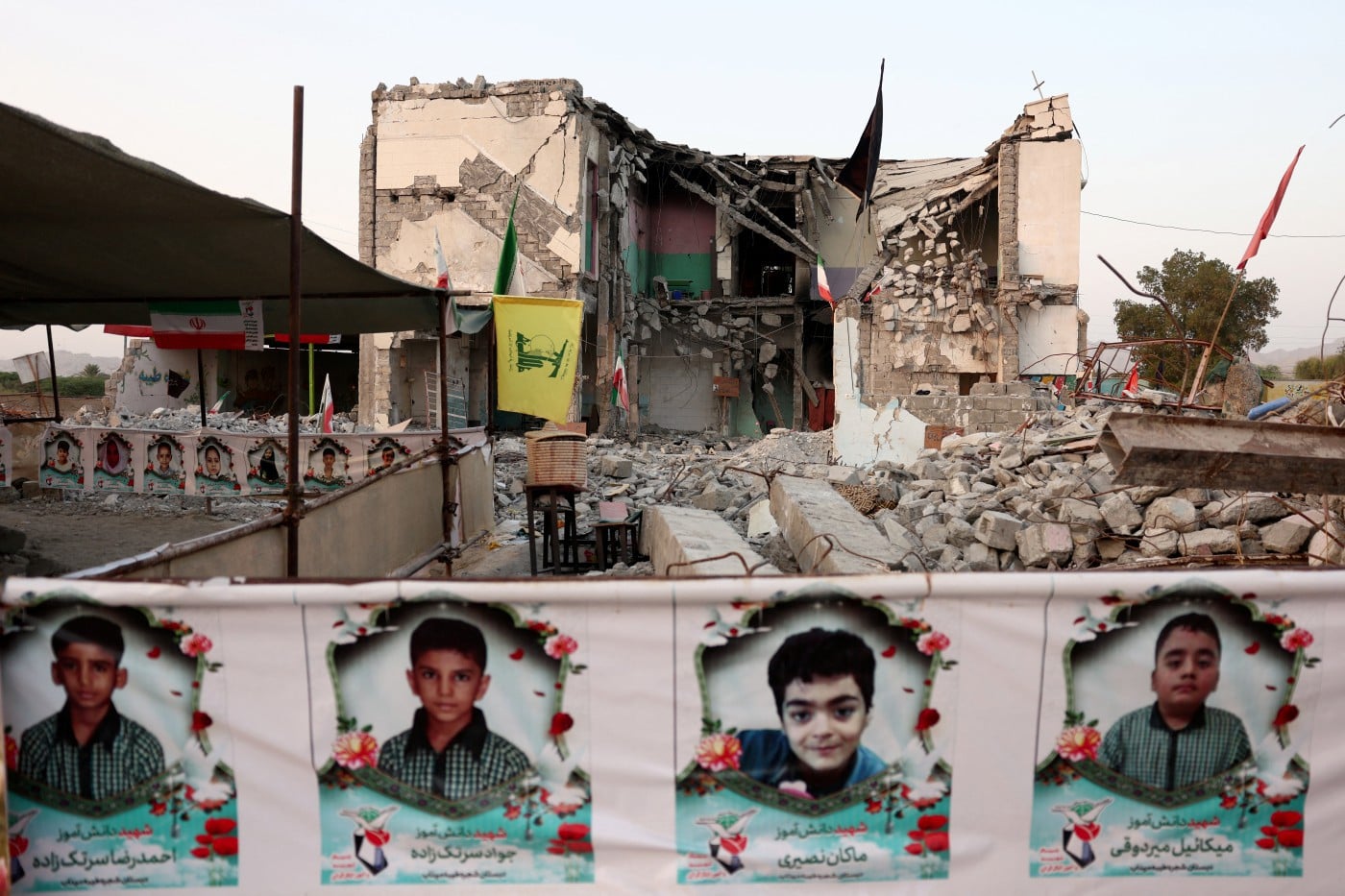
123 children died when US struck a school in Minab, Iran on the opening days of the war in February 2026.
Image via New Straits Times / ReutersUsers reportedly operated under the assumption that the system would automatically catch outdated records and flag stale intelligence
However, a critical breakdown in military data-sharing proved fatal. Human analysts had noted years ago that the targeted site — a former military compound — had been converted into a brightly painted school, a fact clearly corroborated by commercial satellite imagery dating back to 2018.
Because these crucial notes were logged in a disconnected database that failed to sync with the primary military intelligence system, the updated information never reached the active strike team.
Palantir's AI system reportedly fed outdated information.
Image via New Straits TimesThe US Defence Department review found that this catastrophic error was further compounded by severe systemic staffing cuts
In the lead-up to the strike, the military's civilian harm mitigation team had been drastically reduced from 10 personnel to just one, severely limiting human oversight.
Palantir pushed back against claims that its technology is to blame
A spokesperson for the company denied that its software was at fault, stating that Palantir "is not responsible for the underlying data nor identifying intelligence deficiencies".
The international community responded with severe condemnation. A United Nations (UN) mission officially declared the attack a war crime, citing reckless negligence.
In its findings, the UN concluded that US forces failed to verify their military objective, highlighting the incident as a grim warning about the reality of deploying automated tools in combat without rigorous human verification.
