
7 Malaysian Ships Given Green Light To Leave Hormuz, But Crews Face Mines, Missiles, And Chaos
A veteran mariner said navigating the strait in peacetime is already demanding.


 Cover image via Giuseppe Cacace/AFP & SAYS/Zoom Earth
Follow us on Instagram, TikTok, and WhatsApp for the latest stories and breaking news.
Seven Malaysia-flagged vessels are preparing to exit the Strait of Hormuz after receiving clearance from Iran, but for those onboard, the journey ahead is anything but routine
A veteran mariner has described the situation bluntly: sailing out right now is a "nightmare".

Shipping under fire in the Persian Gulf, attacks on tankers and cargo ships in the Persian Gulf region.
Image via SAYS/Zoom EarthWhat's happening
The seven vessels — including four oil tankers — are owned by some of Malaysia's biggest corporations:
- Petronas: 3 ships
- MISC Bhd: 2 ships
- Sapura Energy: 1 ship
- Shapadu Corporation Sdn Bhd: 1 ship
They are among potentially thousands of vessels caught in a bottleneck as tensions escalate in the region.
Even with clearance to leave, getting out safely is the real challenge.
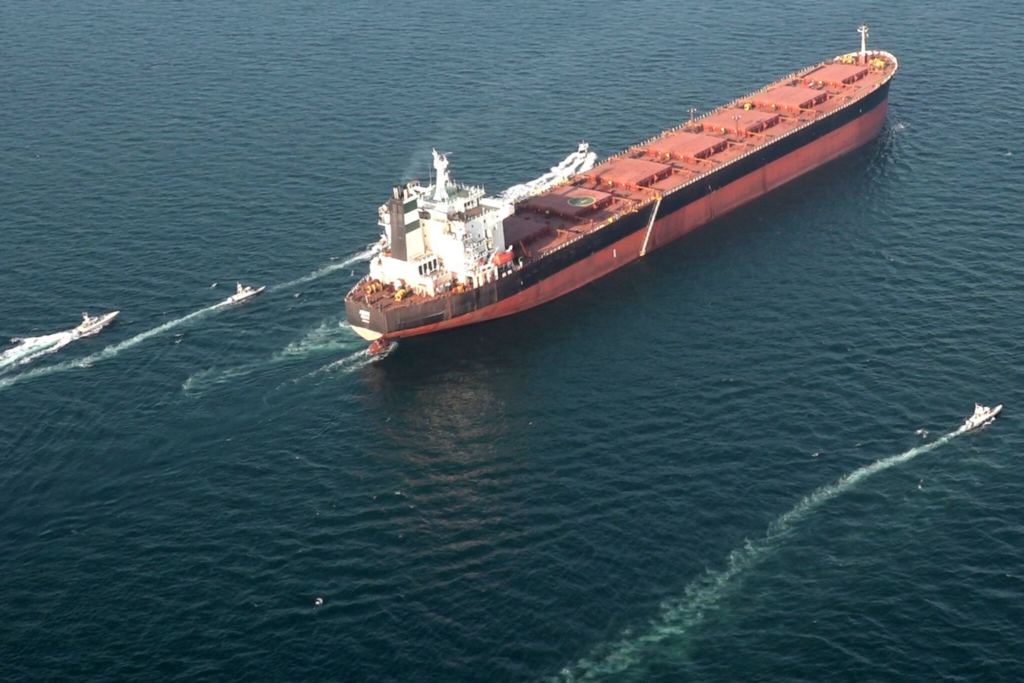
A photo released by Iran's Revolutionary Guards Corps (IRGC) in February shows boats manoeuvring around a tanker vessel during a military exercise in the Strait of Hormuz.
Image via AFP Photo/Ho/Sepah News"It's a nightmare" to sail right now
Singapore-based Captain S K Singam, with nearly 40 years of maritime experience, told the New Straits Times that navigating the strait during peacetime is already demanding.
War conditions change everything.
"Mines or missile attacks make it a huge challenge for any seafarer."
He warned that as many as 2,000 ships could be stranded in the area, with the waterway effectively under Iranian control.
Ships must even obtain a specific "password" or clearance code from Iranian authorities to avoid being targeted while passing through.
This clearance code, issued by the Islamic Revolutionary Guard Corps (IRGC), ensures vessels transit the Strait of Hormuz safely.
Because Iran effectively controls the waterway, these codes act as a digital or verbal "key" to ensure a ship is not targeted by drones, missiles, or coastal batteries.
To receive these codes, shipping companies must submit a comprehensive "documentation package" to the IRGC, which typically includes:
- IMO Number and ownership details.
- Full cargo manifest and destination.
- Complete crew list.
Why this matters
The Strait of Hormuz isn't just another shipping route; it carries about 20% of the world's oil supply.
Any disruption here doesn't just affect ships at sea. It has ripple effects on global fuel prices, supply chains, and eventually what people pay at the pump.
What crews are up against
According to Singam, the risks are layered and constant:
1. Mines and missile threats
The narrow channel is believed to be littered with mines, while drones and missiles raise the risk of accidental strikes.
2. Electronic warfare
Signal jamming can disrupt GPS and navigation systems — a serious problem in such a tight and congested route.
3. High tension at sea
With military activity in the air and surrounding waters, even routine navigation becomes unpredictable.
4. Limited supplies
Some ships have been stuck long enough to face dwindling food rations, adding to crew stress and fatigue.
"Trapped ships face low supplies and war-risk pay cannot replace lives."

Captain S K Singam in conversation with the New Straits Times.
Image via NST Online (YouTube)Even the crew has a choice
Under maritime law, seafarers are not obligated to sail under extreme danger.
That means every voyage isn't just a logistical decision; it's a personal one for the crew onboard.
How they're trying to stay safe
To reduce the risks, Singam outlined several precautions crews should take:
Sail in convoy
Moving together allows ships to coordinate and support one another if something goes wrong.
"Definitely, I think convoy, definitely."
Leave during daylight
Better visibility helps crews detect mines and avoid collisions.
Plan for everything
Crews are advised to prepare multiple contingency plans and run emergency drills before departure.
Double-check navigation
With GPS signals potentially compromised, crews must rely on radar and visual bearings as backup.
The bottom line
Clearance to leave doesn't mean safe passage.
For these seven Malaysian ships, the journey out of the Strait of Hormuz is less about navigation and more about survival in a high-risk, high-stakes corridor where one mistake could be fatal.
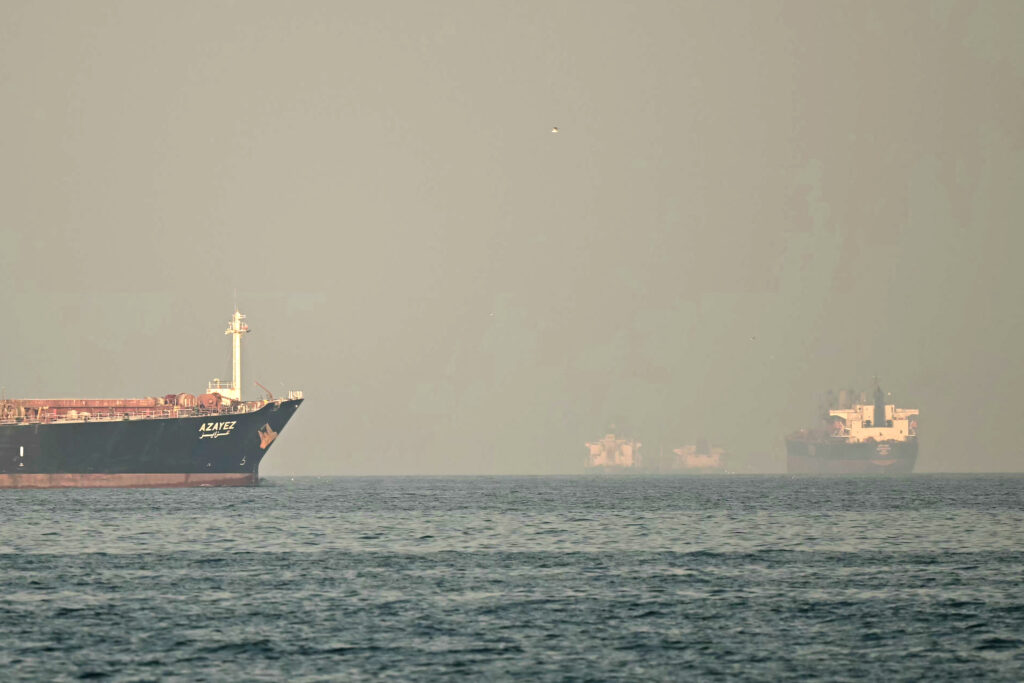
Cargo ships and tankers are seen off the coast of Fujairah, in the Strait of Hormuz, the northern Emirates.
Image via Giuseppe Cacace/AFP