
Why Are Durian Prices So Low Now, And Will They Stay Cheap Until Next Year? Experts Explain
Cheaper Musang King prices are a win for consumers, but they come at a cost to farmers whose profit margins are being squeezed. This article explores the thorny issue.


 Cover image via
 Follow us on Instagram, TikTok, and WhatsApp for the latest stories and breaking news.
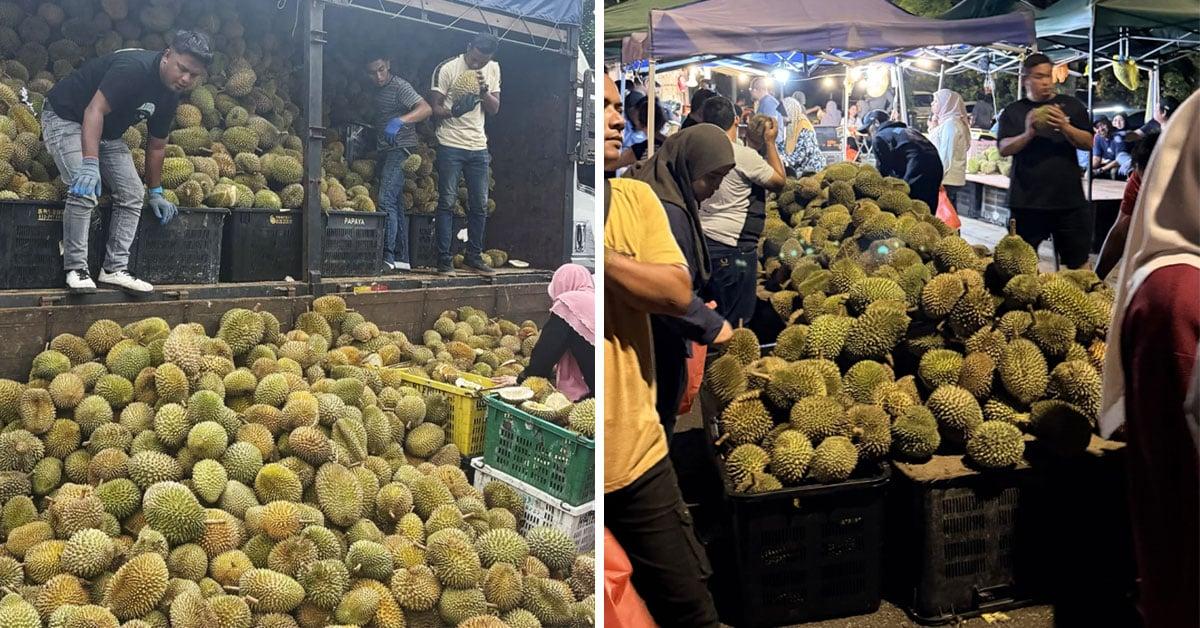
Durian prices have plummeted recently, with some describing the phenomenon as a "durian tsunami"
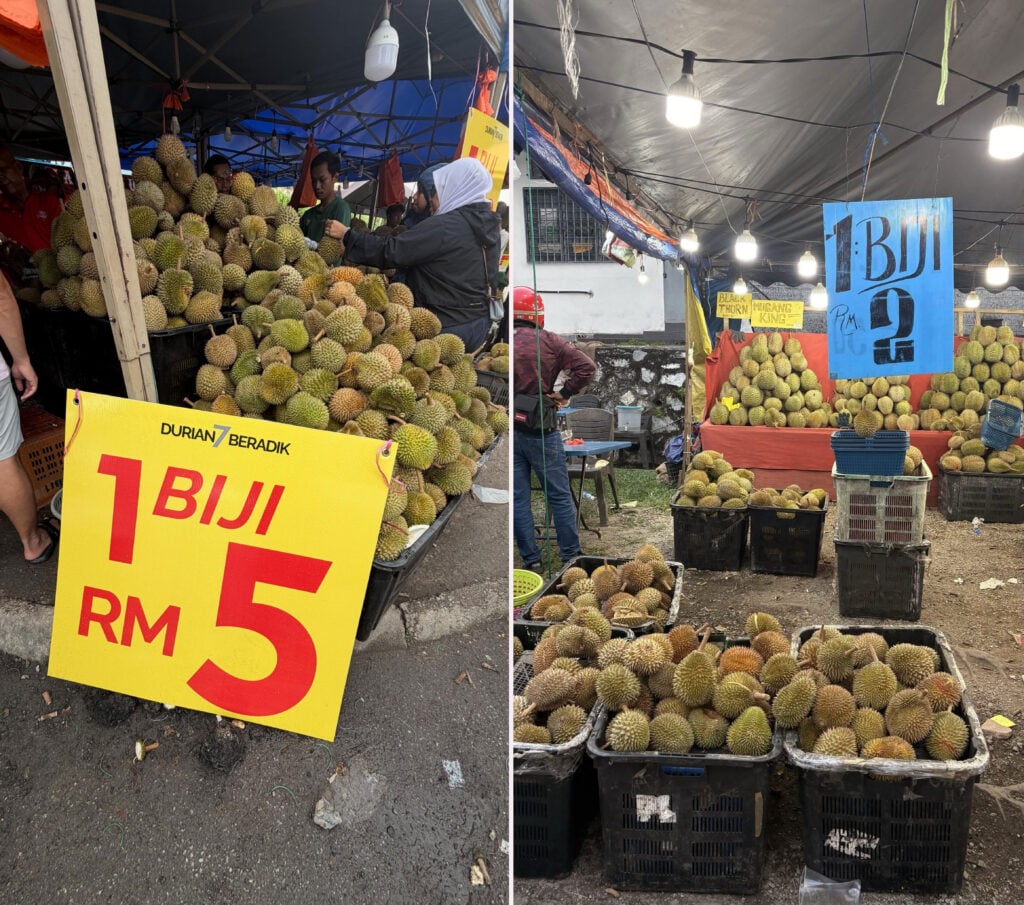
Photos circulating online show local durian varieties being sold for just RM2 per fruit, while premium varieties such as Musang King are going for as low as RM9 per kg.
That marks a drop of about 70% from the usual RM40 per kg for the prized variant. Some news reports have even noted discounts of up to 90% in recent weeks.
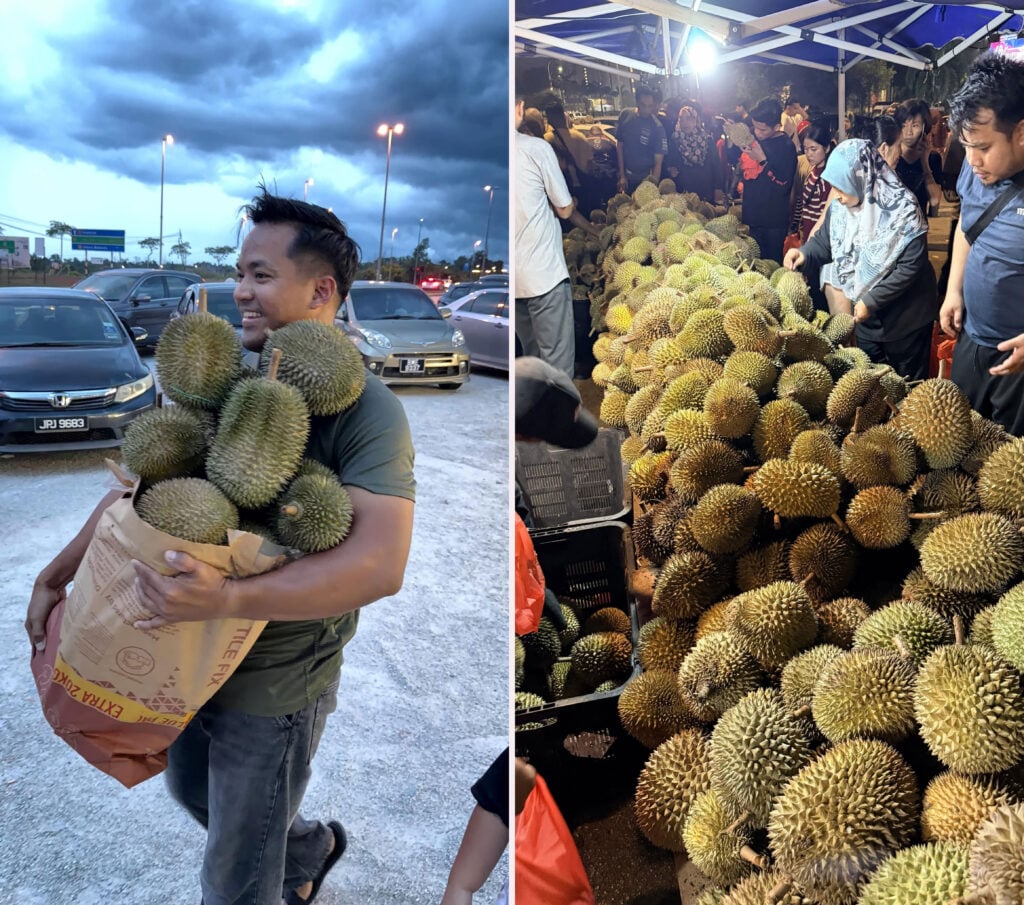
Some sellers are even charging customers by the bag, with buyers seen stuffing large plastic bags or gunny sacks with as many durians as they can fit.
In Melaka, the state government is even organising a buffet featuring premium Musang King and Black Thorn durians for just RM25 per person this weekend, cheaper than the price of a single fruit in previous seasons.
The reason for the frenzy of sales is simple: fresh durians have a short shelf life of between four and seven days.
If farmers and vendors do not sell their produce quickly, the losses they face could easily reach tens or even hundreds of thousands of ringgit.
But is this just a one-season glut, or a sign of where Malaysia's durian industry is heading?
To understand what's happening, here's what you need to know:
1. The "durian tsunami" is not new, and it may not be ending anytime soon
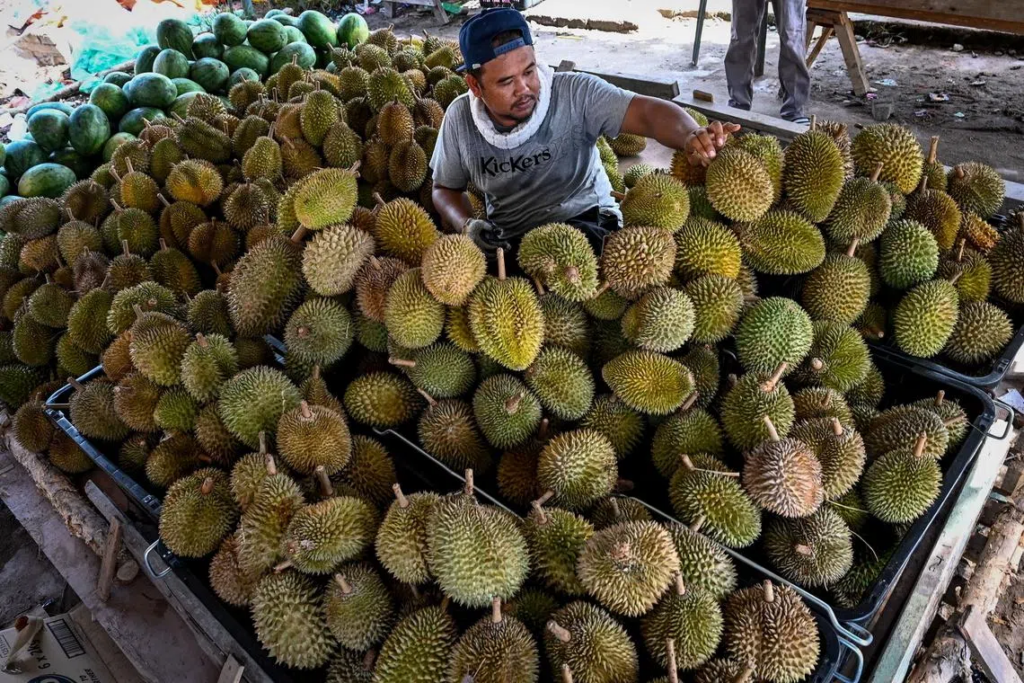
Speaking to SAYS, Professor Khoo Gaik Cheng, the Deputy Dean of Research and Sustainability at the Faculty of Arts and Social Sciences, Sunway University, said this is not the first time Malaysia has seen unusually cheap durians.
She said the term "durian tsunami" was already being used in December 2025, when Musang King prices also fell sharply.
"The 2026 season isn't the first year of significant yields," she said, adding that the current situation has been years in the making.
A big reason is the durian planting boom that began around 2015, when demand for Musang King, especially from China, encouraged many farmers to enter the industry.
Durian farm owner and trader Bobby Sim told SAYS that many farmers converted oil palm land into durian orchards due to higher returns.
"A durian tree takes five to seven years to fruit and closer to 10 to hit full yield. So all that planting is only maturing now, and it is maturing at the same time," said the founder of Dato Durian, which exports premium harvests across Asia.
He added that this year's weather also compressed harvest timing across states, flooding the market with supply.
The Star reported that industry players have linked the glut to simultaneous harvests in Perak, Penang, and Johor, as well as trees planted between 2015 and 2020 reaching full production.
According to Bernama, the Federal Agricultural Marketing Authority (FAMA) also said the durian season is occurring simultaneously in most states from June to August, while favourable weather has boosted supply.
As Sim put it, "It is not one bad year, it is years of planting arriving all at once."
2. Cheap durians are often fruits that cannot meet export standards
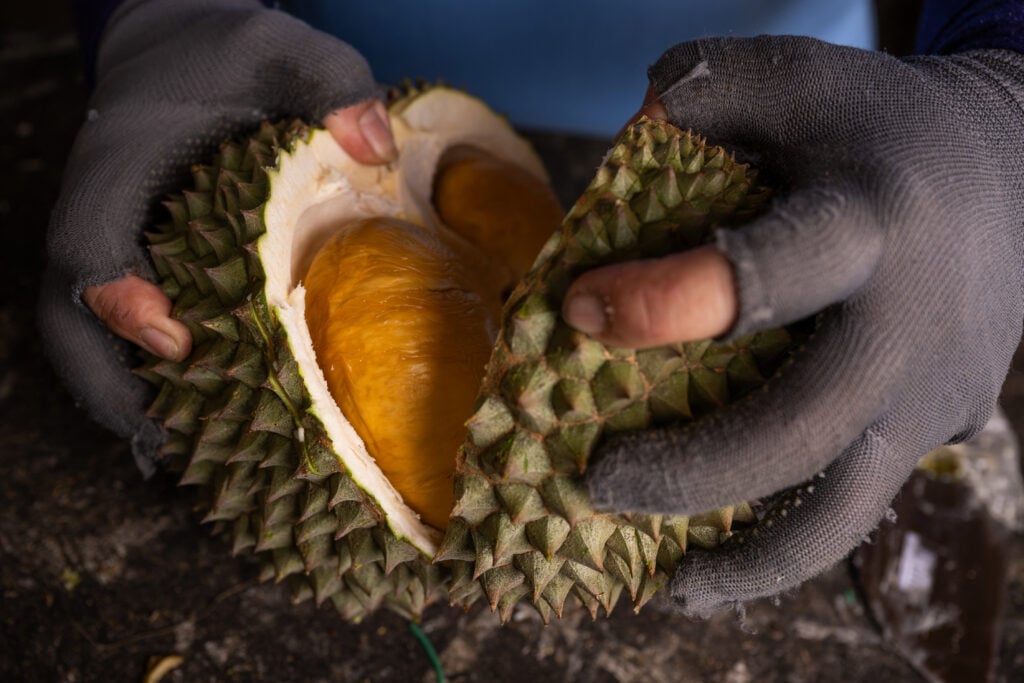
One common misconception is that all Musang King durians are equal. They are not.
Khoo said grading depends on size, shape, appearance, and physical defects.
For export markets, the professor, who researches the durian industry from a posthumanist and sustainability perspective, said durians are generally expected to weigh between 1.5kg and 3.5kg, have even and symmetrical segments, and be free insect damage, burn marks, cracks, broken thorns, and pest marks.
The colour should also be even.
In China, the requirements are even stricter. Khoo said farms need proper certification, including Malaysian Good Agricultural Practices (myGAP), and controlled harvesting methods like netting fallen fruit.
The fruit itself must usually be AA or A grade.
She added that even then, shipments can still be rejected at border inspections if issues such as chemical residue are detected.
Sim said there is often confusion between eating quality and export quality.
"What makes a durian genuinely good to eat is the flesh: thick, creamy, golden, with small seeds and that bitter-sweet complexity," he said.
But commercial grading, he explained, is more about whether the fruit has the right size, shape, appearance, and durability to survive shipping.
"Whatever fails that standard is still edible, so it gets sold locally cheaply," he said.
That explains the sudden influx of low-priced Musang King and other varieties in the local market.
According to Bernama, FAMA said the oversupply was due to export-grade clones failing to meet export standards, not weak demand for local village durians.
FAMA deputy director-general Faisal Iswardi Ismail said the glut was also caused by cloned varieties such as Musang King from orchards under 10 years old, which produced lower-quality fruit that did not meet export requirements for markets such as China and Singapore.
Industry players said the steepest price drops were affecting lower-grade fruits, while export-grade durians remained more insulated from the slump. This is evident in Penang, where premium Musang King continues to fetch RM68 per kg as enthusiasts pay for its rarity and taste, reported The Star.
This means the issue is not just that Malaysia is producing more durians. It is that Malaysia is producing more durians than the export market is willing to accept at premium prices.
3. Cheap durians may continue, but farmers cannot survive on panic selling forever
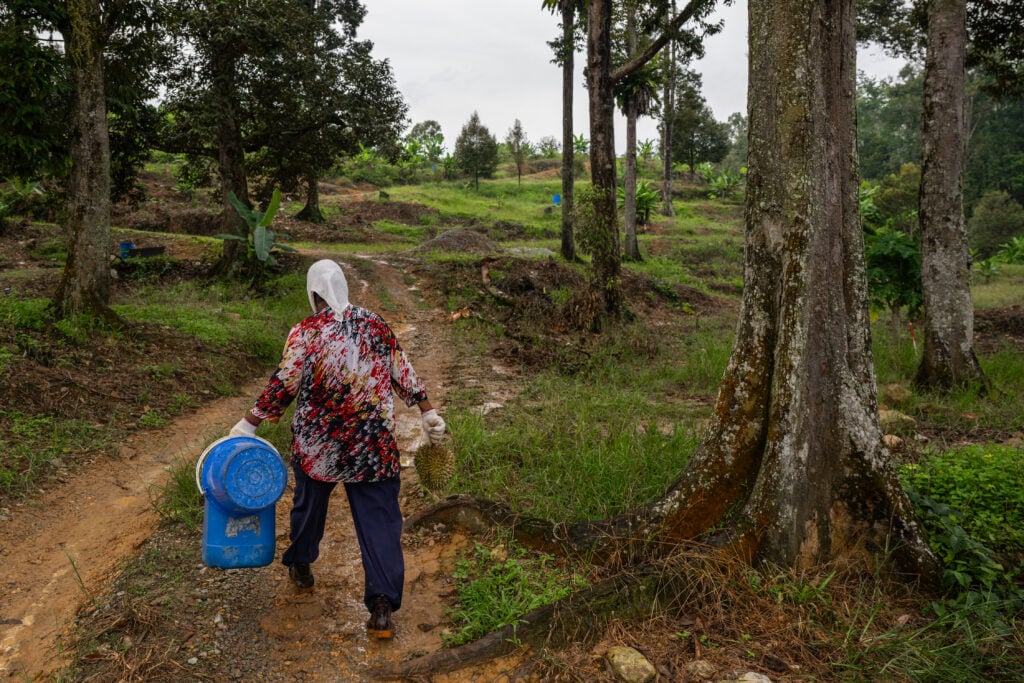
For consumers, the short-term outlook is good.
Sim believes this is unlikely to be a one-off season.
"The trees that have been planted are only going to produce more, not less, and the competition is about to get worse, not better," he said.
He warned that farmers should not expect prices to rebound quickly, as oversupply is becoming structural.
Khoo also gave a cautious view.
She said yields could continue rising if there are no climate disruptions, but climate change has made farming increasingly unpredictable.
Too much rain at the wrong time can increase humidity, reduce sunlight, trigger diseases, and even cause farmers to lose trees. Rain during the flowering period can also result in fewer fruits.
"If climate change affects yield adversely, then demand will exceed supply, which will keep prices up," she said.
But if more plantations continue opening, and if quality does not improve enough for export, she said local oversupply may continue to push prices down.
This is where farmers may face the hardest choices.
Sim said the industry cannot depend only on selling fresh fruit during a short harvest window.
"What actually helps farmers is not praying for a smaller harvest," he said.
Instead, he said farmers need more export markets, better grading, stronger branding, and more downstream options, such as frozen durian, pulp, and durian-based products.
FAMA has introduced several initiatives to support the industry.
According to Bernama, FAMA is targeting direct purchases of 1,000 tonnes of durian worth RM7 million through 42 operational centres nationwide. It has also opened fruit sales locations and supported entrepreneurs who help absorb excess supply.
The agency is also looking at expanding exports to markets such as Canada, the UK, New Zealand, and Japan, while strengthening traceability, grading, packaging, and labelling systems.
Still, not every farmer will benefit equally.
Khoo said farmers with capital to invest in better fertilisers, technology, labour, and farm management may be in a stronger position than smallholders who lack the money to upgrade.
In the long run, she said, if farmers are forced to sell durians at extremely low prices, some may think twice about continuing because the investment is high.
Sim said the challenge for premium sellers is also psychological.
"When the news says durian is RM9 a kilo, every customer now thinks all durian should be cheap," he said.
"But my cost base has not dropped. Good fruit, strict grading, cold same-day delivery into Singapore, none of that got cheaper just because the market is flooded."
For consumers, the current durian crash may feel like a windfall. But for farmers, it is a warning that the industry has entered a more competitive phase.
From a cultural and economic standpoint, Khoo said durians should not become a luxury product accessible only to those who can afford it.
"For centuries, it has been part of our landscape and it belongs to everyone and should be affordable," she said.
"But we need to find a balance between the cost of cultivating the fruit and selling it."
