
Malaysia’s Economy Is Growing, So Why Aren’t Workers Feeling It? PERKESO Points To 4 Main Reasons
The country's economy may be growing on paper, but many workers are still waiting to feel the benefits in their pay packets.


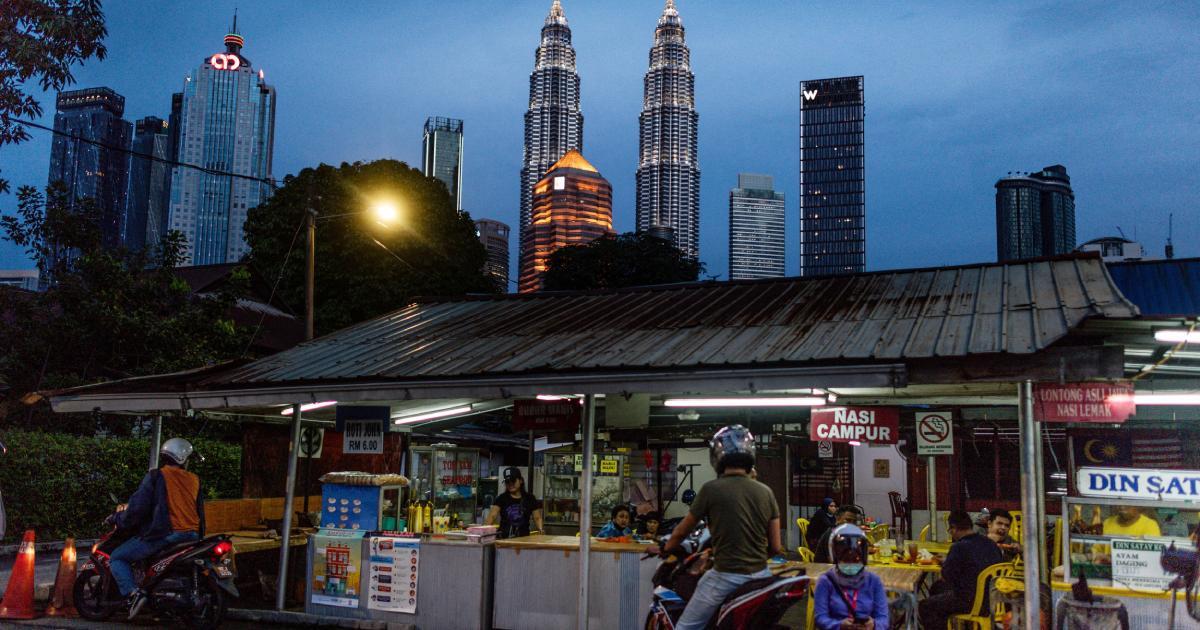 Cover image via Mohd Rasfan/AFP
Follow us on Instagram, TikTok, and WhatsApp for the latest stories and breaking news.
Malaysia's labour market continues to look relatively stable on paper, but the latest government data suggests early signs of a slowdown
According to the latest figures from the Department of Statistics Malaysia (DOSM), the country's unemployment rate rose to 3.0% in May from 2.9% in March, marking the first increase in six months.
The economy has also continued to benefit from steady growth, strong household spending, and increasing foreign investment, particularly in high-value industries such as digital services and green energy.
However, despite these positive indicators, Malaysian workers still feel financially squeezed.
According to the Social Security Organisation's (PERKESO) Labour Market Exchange (LMX), economic growth has yet to translate into meaningful wage growth for many workers.
Data from PERKESO shows that half of Malaysian workers earn below RM2,999 a month, while only 22% earn RM5,000 and above.
THE WAGE REALITY
PERKESO data shows that many Malaysian workers still earning modest wages.
COMPLETE EMPLOYEE MONTHLY WAGE DISTRIBUTION
(Majority Workforce)
(Middle Tier)
(Upper Tier)
So why is there a gap between a growing economy and stagnant wages?
PERKESO highlighted four structural reasons.
1. Many Malaysian workers are still in low-productivity jobs
A significant portion of Malaysia's workforce remains concentrated in low- and mid-skilled roles.
Many of these jobs are found in industries with limited profit margins, meaning businesses may struggle to offer large salary increases even when demand for workers remains strong.
Without productivity improvements, wage growth tends to remain limited.

2. High-paying industries are not hiring enough workers
Malaysia has attracted investment into higher-value sectors, including technology, digital services, and green industries.
However, these sectors account for a relatively small portion of total employment.
This means the benefits of economic expansion are not evenly distributed, with many workers remaining outside industries that typically offer higher salaries and better career progression.
3. Most businesses are SMEs with limited capacity to raise wages
Malaysia's economy is dominated by small and medium enterprises (SMEs), which make up more than 97% of businesses.
While SMEs provide the majority of employment opportunities, many face challenges such as limited capital, lower profit margins, and difficulties adopting new technologies.
These constraints can make it harder for businesses to invest in automation, improve productivity and increase employee wages.
MALAYSIA'S SME ECONOMIC FOOTPRINT
4. Slow digitalisation is holding back productivity
PERKESO also pointed to slower digital adoption as another factor behind weak wage growth.
Technology can help businesses become more efficient, but many companies have yet to fully integrate digital tools into their operations.
Without stronger productivity gains, companies may have fewer resources to provide higher salaries.
Beyond growth on paper, Malaysia needs growth that reaches workers
According to PERKESO, improving wages requires more than just creating jobs.
The country needs productivity-led growth, where businesses adopt technology, workers gain skills for higher-value roles, and salary systems reward skills and competency rather than simply years of service.
It also called for stronger support to help SMEs modernise and move towards higher value-added activities.
As Malaysia works towards becoming a high-income nation under the 13th Malaysia Plan (RMK13), the challenge is no longer just creating jobs or keeping unemployment in check.
The bigger question is whether economic growth can translate into higher wages, better jobs, and improved living standards for ordinary Malaysians.
Because a strong economy is only meaningful when workers can actually feel the difference in their daily lives.