
PETRONAS Responds To Malaysia’s Fuel Supply Concerns After Strait Of Hormuz Closure
"Even though Malaysia is an oil-producing nation, it is not fully insulated from the impact of the crisis," the company said.


 Cover image via
 Follow us on Instagram, TikTok, and WhatsApp for the latest stories and breaking news.
Amid growing concerns over fuel supply disruptions, PETRONAS has addressed Malaysia's current situation following the closure of the Strait of Hormuz
The clarification comes as global oil supply chains face disruptions due to the ongoing conflict in the Middle East, which has significantly impacted transportation and shipping routes.
In a press release published on Monday, 30 March, PETRONAS said it is closely monitoring the nation's fuel supply to help safeguard stability nationwide amid the ongoing crisis.
"Even though Malaysia is an oil-producing nation, it is not fully insulated from the impact of the crisis.
"Nearly 40% of the country's crude oil requirements transit through the Strait of Hormuz.
"Since the onset of the crisis, crude oil prices have risen by almost 40%. Consequently, global shipping costs, insurance premiums and delivery-related logistics have also increased significantly. All these developments have impacted Malaysia's fuel supply security," it said.
Below is the breakdown of Malaysia's crude oil sources:
• Malaysia: 48%
• Strait of Hormuz: 38%
• Southeast Asia/Africa/Others: 7%
• West Asia/Others: 7%
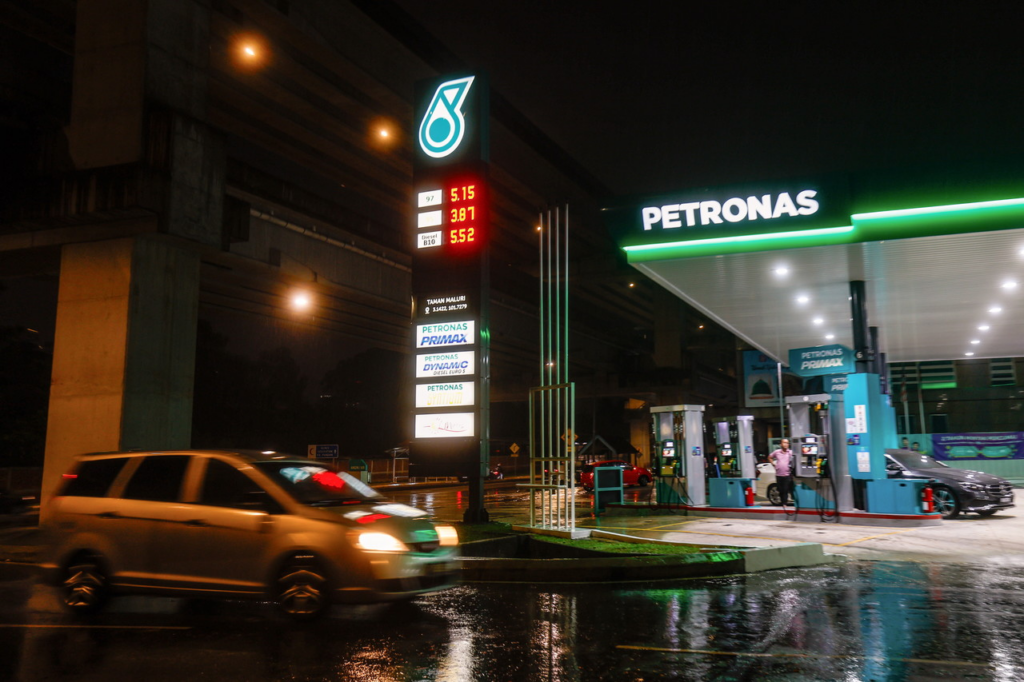
The national oil and gas company added that national demand continues to exceed domestic supply
To make up for the shortfall, PETRONAS is utilising its integrated operations and subsidiaries to ensure a steady supply of petrol and diesel.
At present, fuel supply at PETRONAS stations is expected to remain sufficient until the end of May, according to an infographic shared on its Facebook page on Tuesday, 31 March.
The company supplies 48% of the refined petroleum products nationwide, while the remaining 52% are supplied by other oil and gas companies in Malaysia.
PETRONAS urged the public to remain calm and avoid panic buying or hoarding fuel, warning that such behaviour could worsen the situation
Despite rising global oil prices, fuel prices in Malaysia remain controlled under the government's Automatic Pricing Mechanism, it said.
Subsidies for RON95 petrol and diesel are still in effect, helping cushion the impact and keeping prices among the lowest in the region.
As uncertainty remains over the duration and scale of the conflict, the company is encouraging both industries and consumers to use energy more efficiently.
